A hire desk that is open when the office is not
One page listing the boats, the bikes, the paddleboards and the pitch-and-putt with what is left of each. Guests book from the pitch at nine at night rather than queueing at eight in the morning.
Guests book a kayak, a bike, the pitch-and-putt or the Saturday walk themselves, from the phone in their hand at the pitch, each one against a real count of what you own, so two families cannot take the same canoe. Deposits hold the hire, a confirmation goes out on its own, and an hour somebody gives back goes straight back on the page for the next family to take.

Blu CampBook online
Canoe2h · 2 left$24.00
Mountain bikeHalf day · size L$18.00
Dawn walk12 placesBook
Next free10:00 AM1:00 PM3:00 PM
Canoes
6 of 6 out
There is no seventh to hire
Deposit
$6.00
25% held the canoe hour
Waiver
Signed
Before they leave the pitch
A pitch is booked once and stayed in for a week. Everything else on the site turns over four times a day, and that is the part a warden ends up running from a clipboard.
One page listing the boats, the bikes, the paddleboards and the pitch-and-putt with what is left of each. Guests book from the pitch at nine at night rather than queueing at eight in the morning.
Every boat, bike and buggy is counted, so the hour is offered until the last one is gone and then stops being offered. Nobody arrives at the water with a booking and no boat.
On the paid plans you ask what you need at the point of booking, including the waiver, swimming ability, rider height and whether a child is coming. It arrives with the booking instead of on a clipboard in the rain.
A guided walk, a bushcraft hour or a kids’ session takes the number you can actually run with. Once it is full the page says so and the next family waits rather than turning up.

A campground is not one diary. The function room goes out for a birthday on Saturday, the pitch-and-putt turns over every hour, the launch ramp takes one trailer at a time and the laundry has four machines. Each of them is its own bookable thing with its own hours, its own count and its own rules, and they all show in one calendar, so the warden covering reception at seven in the morning can see the whole site on one screen instead of four books behind the counter.
A campground’s week is not the same week all year. The bike hire runs seven days in August and weekends only in February; the dawn walk goes out at half five in June and not at all in December. Each activity keeps its own days and its own hours, so you turn the winter shape on and the booking page follows it, nothing to rebuild, nothing to remember, and no guest offered a paddleboard on a Tuesday in January.
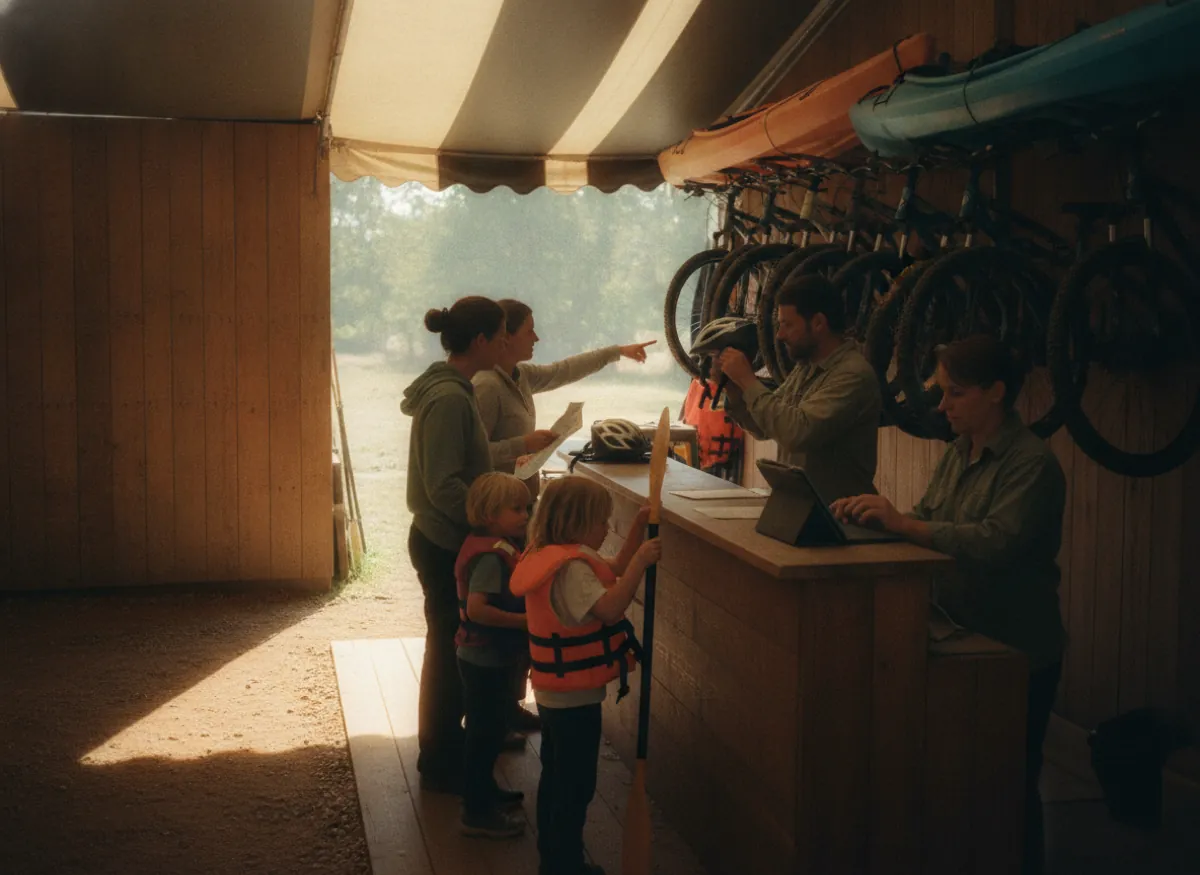
Twenty past nine on the first Saturday of half term. There are nine people at the hire desk, one warden, and a clipboard with the morning’s canoes on it. Two of the families have driven over from the far end of the site, and one of them is holding a child in a wetsuit.
The awkward part is not the queue. It is that the clipboard is the only copy: the warden cannot be at the desk and at the launch ramp, and nobody on the site can find out what is left without walking to reception and standing in the same line to ask.
Picktime puts the boats, the bikes and the sessions on a page guests book from the pitch, counts every item so the last one cannot go twice, and puts a returned hour straight back on that page for the next family to take.
Canoes, paddleboards, bikes by size, buggies, the pitch-and-putt, the function room, the launch slot. Put the real number against each one, and the hours it actually goes out. Summer hours and winter hours are different lists.
Charge for the hour, hold a deposit on the expensive kit, or take nothing. On the paid plans you can add the waiver and the questions you need answered, including swimming ability, rider height and whether an adult is coming, to the booking form.
The booking page is a link, so it goes in the arrivals email, on a QR code at the barrier and on the sign at the shower block. It embeds into your campground booking website as well, if you have one. A guest with a phone and a bar of signal can book without walking to reception.
A campground’s phone rings hardest at exactly the hours the office is closed: somebody arriving late, somebody asking whether the kayaks run tomorrow, somebody who wants the function room for a birthday. Picktime’s AI receptionist answers those calls around the clock on a number of its own, takes as many at once as come in, works out what the caller wants, captures their name and their number, and ends on a booking that lands in your calendar like any other. If it is something only a person can settle, it transfers the call. Every one is transcribed, so the Monday morning question is answered by reading rather than by guessing what was said.
The free plan is a plan, not a trial. There is no date at which it stops, no card to add, and nothing that quietly turns off in a fortnight.
A hire lands in the calendar reception already has open, and the paid plans sync it both ways, so when it moves there it moves here. Payments run through PayPal on the free plan and through Stripe or Square on the paid ones, and the booking page goes on your Facebook page and your Google listing as well as your site, which is where a family looking for somewhere to camp is actually looking.
Picktime runs in a browser on a phone, so a warden can check the afternoon’s canoes from the launch ramp instead of walking back to reception, and there are iOS and Android apps if you would rather have one.
It depends what you need it to book. Systems like Campspot and Firefly are built around pitch nights, site maps and seasonal rates. Picktime is free and built around the hours (the boats, the bikes, the activity sessions, the function room and the launch slot), which is the half of a campground that turns over four times a day. A guest house has the same split, and booking the sittings and the tables rather than the room-night is the page for it.
Yes. The booking page runs in any phone browser with nothing to install and no account to make, so a guest sitting at their pitch can book tomorrow’s paddleboard at nine at night. There are iOS and Android apps for your own staff.
Yes. Every boat, bike and buggy is counted, and an hour stops being offered once the last one is taken. A booking that is given back goes straight back on the page, where the next family takes it, and a waiting list that is offered it first sits on the paid plans.
Yes. Payment is set per item: the full hire charge, a percentage, a fixed deposit or nothing at all. The paddleboard can hold a deposit while the pitch-and-putt stays free to book. The hour is confirmed once the payment has gone through.
Yes, on the paid plans. Add the waiver and whatever else you have to ask (swimming ability, rider height, whether an adult is coming) to the booking form, and it comes in with the booking rather than on a clipboard at the slipway.
Yes. Each thing you hire out keeps its own days and its own hours, so the bike shed can run seven days in August and weekends only in February without touching anything else on the site.
Yes. Each site keeps its own kit, its own hours and its own booking page, and they all show in one calendar, so somebody looking after three parks is on one screen rather than logging in three times.
That question has two owners. A camper looking for somewhere to go wants a listing site, and we do not build one. An operator asking which app their own guests should book on wants a page of their own, on their own address, where the canoes and the activity sessions are counted properly. Picktime is the second, and a guest uses it in a phone browser with nothing to install.
Yes, several, and they are a different kind of product from this one. A marketplace finds you guests and lists you next to everybody else; the relationship with the camper is partly theirs. Picktime finds you nobody, and that is worth knowing before you weigh the two against each other. It is the booking page for the guests you already have, embedded in your own website, and what it is good at is the hire and the activity sessions a listing site was never built to count.
Two systems, and anything sold as doing both usually does one of them badly. Pitch nights want a site map, seasonal rates and a stay measured in days, which is what Campspot and Firefly are built around. Hourly hire wants a real count of how many canoes exist and an hour that goes back on the page the moment somebody cancels, and that is the half Picktime does on the free plan.
On the water Named boats hired by the hour, with the safety form done before the engine starts.
See boat rental scheduling
Kit that moves Gear booked out and back in, counted against the booking that needs it.
See equipment rental scheduling
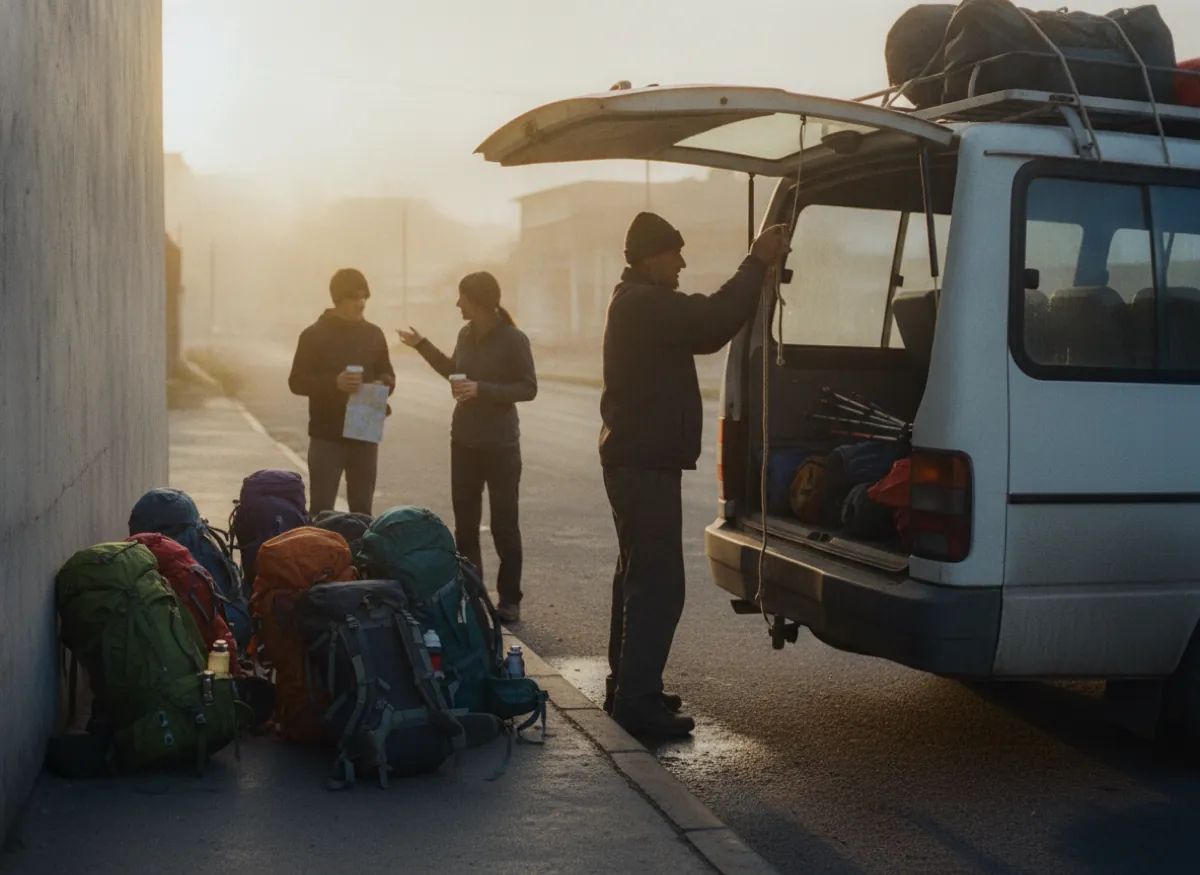
Departures Walks and sessions with a headcount, booked weeks ahead from another time zone.
See tour guide schedulingFree forever for a single site. No card, no trial clock, and the boats can be bookable before the gate opens tomorrow.