Free contractor scheduling software for a crew small enough that the diary is one book

When there are three of you, the diary is whatever the last person wrote down, and the day it goes wrong is the day two customers are told the same Tuesday morning. Picktime gives the crew one diary that cannot be written in twice, lets customers pick their own slot from what is actually free, and raises the invoice off the job that was already booked.

  • Free forever plan
  • One diary for the crew
  • No card required
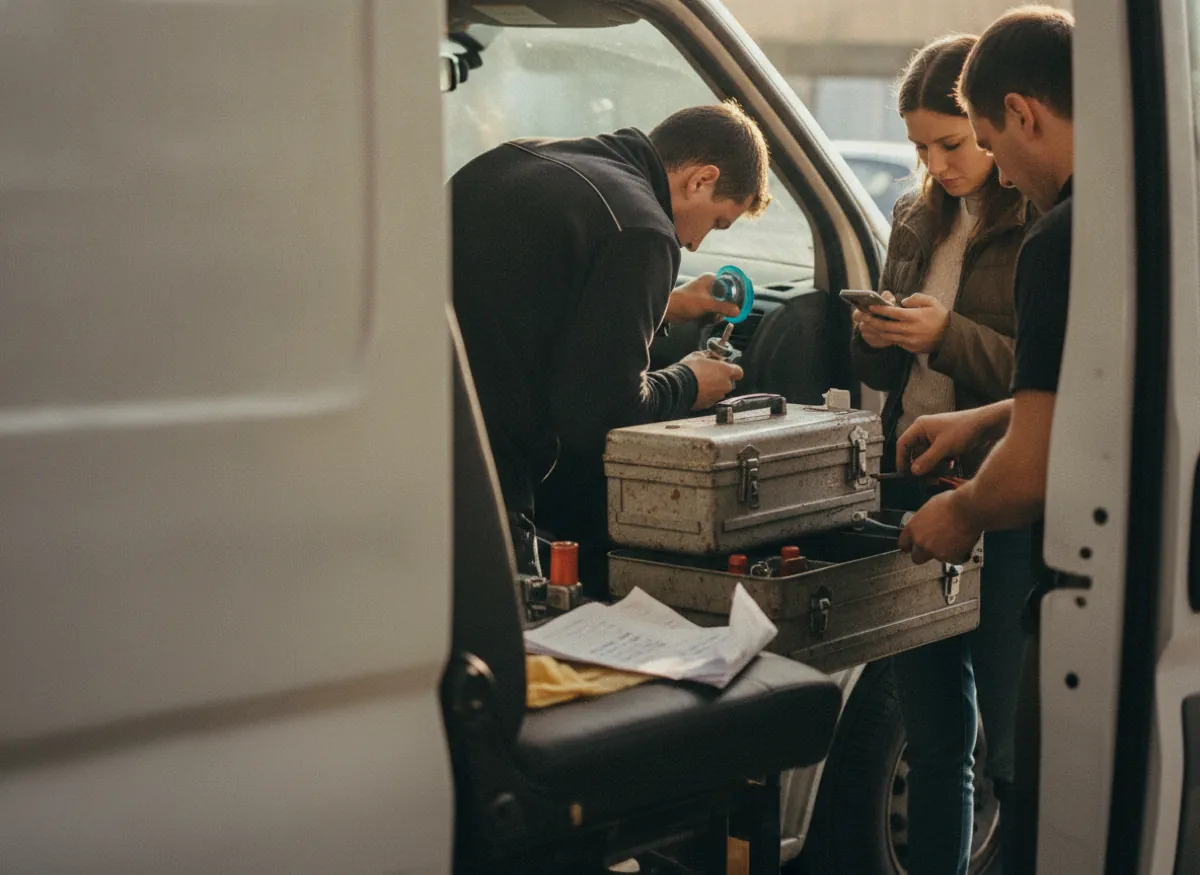
A contractor lifting a toolbox out of the open van door, the paper job sheet still on the seat beside them

Blu TradesBook online

Boiler service1h · Dave$140.00

Callout45m · Next van free$75.00

Annual serviceRepeats every MarchBook

Next free8:15 AM11:00 AM2:30 PM

Booked online

10:40 PM

Nobody answered a phone

Invoice

$140.00

Raised off the boiler service

Tuesday morning

Held once

Nobody can promise it twice

How it works for you

Built for a contractor whose office is the passenger seat

No crew boards, no route plans, no timesheets. One diary that everybody can read and nobody can double-book, and a customer who can put themselves in it.

One diary the whole crew reads, and nobody writes in it twice

Everybody gets their own login and their own hours, and the calendar shows all of it in one view. The moment a Tuesday morning is taken it stops being offered, to you and to the customer both.

One book, three of you: the Blu Trades calendar for Tuesday, November 24 with you, Marc and Sam side by side, your 09:00 boiler service booked and Marc free at the same hour

Customers put themselves in the diary instead of ringing

Your own page listing the jobs you take and how long each one needs. They pick a slot that is really free, and it appears in the crew’s calendar without anybody answering a phone.

Booked at 22:40: the Blu Trades booking page listing a one-hour boiler service and a 30-minute quote visit, the quote visit picked for 13:00 on Tuesday from the slots still free, and the booking landing in the crew’s calendar

Next year’s service booked before you leave this one

On the paid plans, a service that repeats every year or every quarter is booked as a run, so next March is already held. The customer gets the confirmation and you get the work without having to remember it.

Every twelve months: an annual service set to repeat yearly, with the next three Marches already held for the same customer in their fourth year

Invoices raised off the job, not typed out again on a Sunday

Every booking already carries the customer, the work and the price, so the invoice comes off it. Download the PDF, record a payment, or send a reminder on the ones still showing overdue.

Paid, unpaid, overdue: three invoices raised off their jobs, a $140 boiler service paid, a bathroom second fix unpaid and a callout overdue with a reminder ready to send, and the PDF behind them

A confirmation so you are not knocking on an empty house

A confirmation when they book, on the free plan, and a reminder before the day on the paid plans. Each carries a link to move it, so a customer who has to go out tells you the night before rather than not being in when you arrive.

Nobody sent these: the confirmation for a Tuesday 09:00 boiler service with its link to move or cancel, sent when the customer booked, and the reminder sent the day before
Two of you in one diary

Nobody can promise the same Tuesday morning twice

A double-booking on a small crew is not a scheduling error, it is a wasted morning and a customer who now thinks you are disorganised. Everybody on the account has their own hours, their own days off and the jobs they cover, and the calendar is one view of all of it. A slot booked by anybody (you, the customer, the apprentice on the way back from the merchant) stops being offered to everybody else that instant.

Taken means taken: Marc’s Tuesday 09:00 boiler service, booked by Sam from the van, shown as booked in Marc’s diary and no longer offered on your phone, on Sam’s or on the customer’s booking page
When the day moves

A customer who has to move it does it without ringing you

You are under a floor with your phone in the van, and the ten o’clock has decided to go out. Every confirmation carries a link they can use to pick another slot or cancel outright, so the change happens while you are working rather than in four missed calls afterwards. The hour they hand back goes straight onto the crew’s availability, where the next customer can take it. A moved job is a job you still have.

Moved, then filled: a Wednesday 10:00 job moved to Thursday by the customer from the link in their confirmation, the hour shown as available again in the crew’s calendar and open to the next customer on the booking page
Wednesday, 7:55am

Two customers were told the same Tuesday morning

Five to eight. You are outside a bungalow in Elm Road and Marc is outside a flat two miles away, and both of you were given nine o’clock on Tuesday: one over the phone on Friday, one in a text on Monday night that never made it into the book.

Picktime has one diary and it cannot be written in twice. A slot taken by anybody, on any device, stops being offered to everybody in the same second, whether it was the customer taking it themselves or you taking it standing in somebody’s kitchen.

Getting started

Your diary online before the end of the job you are on

A quote visit, a service, a callout and a second fix entered with their lengths and prices where they have one, and working hours set to Monday to Friday with Saturdays and Sundays off
01

Put in the jobs you take and how long they run

A quote visit, a service, a call-out, a second fix, each with its length and its price if it has one. Set your working hours and the days you are not taking anything.

You, Marc and Sam added, each with their own login, working hours and the jobs they cover, so the boiler service is only offered in Marc’s diary
02

Add the crew and give each of them their own hours

Each person gets their own login, their own working hours and the jobs they cover, so the page only offers a boiler service in the diary of somebody who does boilers.

The booking link added to the website, Facebook, a QR code on the van door and text replies, and a callout booked from the van QR code
03

Put the link on the van and in your text replies

Your website, your Facebook page, a QR code on the van door, or pasted into the reply you send from the van. They book, everybody’s calendar updates, and nothing gets written on a job sheet.

Getting paid

The invoice comes off the job that was already booked

  • The booking already knows who the customer is, what was done and what it costs, so the invoice is made from it rather than typed out again on a Sunday evening. Download it as a PDF, send it, and record the payment when it lands.
  • What that buys you is a list you can actually read. Every invoice sits as Paid, Unpaid, Overdue or Refunded, so the ones still owing are visible without going through a chequebook stub and a bank app side by side. When one has gone past its date you send a reminder from the same screen. It is the part of a small contracting business that usually happens last and gets forgotten, and it is attached to the work rather than living in a separate spreadsheet.
An invoice for a $140 boiler service made from the Tuesday, November 24 booking at 14 Elm Road, marked Paid, with buttons to download the PDF, send it and record a payment, and the payment recorded
What it costs

Start free. Pay when the crew grows, not when the work does.

The free plan has no end date and no card behind it. What moves you onto a paid plan is how many of you there are and how many places you work out of.

Free, and it stays free

What one contractor gets without paying

  • Your own booking page for the jobs you take
  • Customers book, move and cancel it themselves
  • A confirmation by email on every booking
  • Every customer, address and job done against the name

Start free

Works with what you use

It sits on the calendar and the card readers you already use

One diary, wherever you look at it

A job booked here shows up in the calendar you already keep on your phone, and a day you block out there stops being offered on the booking page. Payments run through PayPal on the free plan and through Stripe or Square on the paid ones, into your own account, so a deposit on a call-out is settled before anybody sets off.

It lives on the phone

Picktime runs in a phone browser and there are iOS and Android apps, so the next address, the customer’s number and what they booked are in your pocket rather than on a job sheet in somebody else’s van.

Questions

Contractor scheduling: common questions

What is the best scheduling app for contractors?

It depends whether you need a diary or a dispatch system. If your crew is small enough that the problem is one calendar everybody can trust and customers booking themselves, Picktime does that free for one person, with iOS and Android apps for the van. Where most of what you book is quote visits and measured surveys rather than call-outs, booking the client half of a builder’s week is the page to read instead.

Is there free contractor scheduling software?

Yes. Picktime is free forever for one contractor, with your own booking page, customers booking and moving their own slots, a confirmation by email on every booking and every customer’s history in one place. No card, and no date on which it stops.

Can two of us share one diary without clashing?

Yes. Everybody gets their own login, their own working hours and the jobs they cover, and a slot taken by anybody stops being offered to everybody else immediately, including when the customer took it themselves.

Can customers book a call-out themselves?

Yes. Your page lists what you take and how long each job needs, and they pick from what is genuinely free. It works at eleven at night, which is when most people finally get round to sorting the boiler out.

Can I set up an annual service so it comes back round?

Yes, on the paid plans. Book it as a repeating job and next year’s date is held now, with the confirmation going to the customer. You get the work back without having to remember it twelve months later.

Can I invoice from it?

Yes. Invoices are raised off the booking, which already carries the customer, the work and the price. Download the PDF, record a payment, and send a reminder on anything still showing overdue.

Does it plan routes between jobs?

No. Picktime books slots; it does not route a van between them or hold arrival windows. If routing is the thing you need, that is a field service tool rather than this.

Which software is used for scheduling in construction?

Not this kind, on a large site. Construction scheduling there means critical path planning: tasks, dependencies and float across a programme of works, drawn as a chart and kept by somebody whose job that is. Picktime schedules the other calendar on a building job, the one with people in it, the survey, the first fix, the annual service, the customer who has to be at home when you arrive. Three of you in two vans need the second one. Forty subcontractors on one site need the first, and the client meetings that sit alongside that programme are covered by booking site visits on a live job.

Can you make a construction schedule in Excel?

Yes, and plenty of small builders do, with the dates down the left and a bar drawn in coloured cells. It holds up until two people need to change it in the same week, or until somebody rings to ask whether Thursday is free and the only current copy is on a laptop in the van. A spreadsheet cannot refuse a double booking, and refusing double bookings is most of what a diary is for.

What is the most used scheduling software?

Nobody can answer that honestly, and a page that puts a name to it is usually quoting a review site’s own traffic. Compare what actually breaks instead: whether two people can write in the same day without one of them losing, whether a customer can book at eleven at night without ringing, and what happens to the bill when you take somebody on. Picktime’s free plan has no end date, and what eventually moves you off it is the size of the crew rather than the number of jobs.

One diary, and nobody can write in it twice

Free forever for one contractor. No card, no trial clock, and your customers can be booking themselves in tomorrow morning.