Free fitness class booking system for classes that are not all in the same building

A hall on Monday, a park on Wednesday, a hired studio on Saturday. Put every class on one page whatever room it is in, cap each one at what that space actually holds, and let people book and pay for their place without anybody being on a phone.

  • Free forever plan
  • Every venue on one timetable
  • No card required
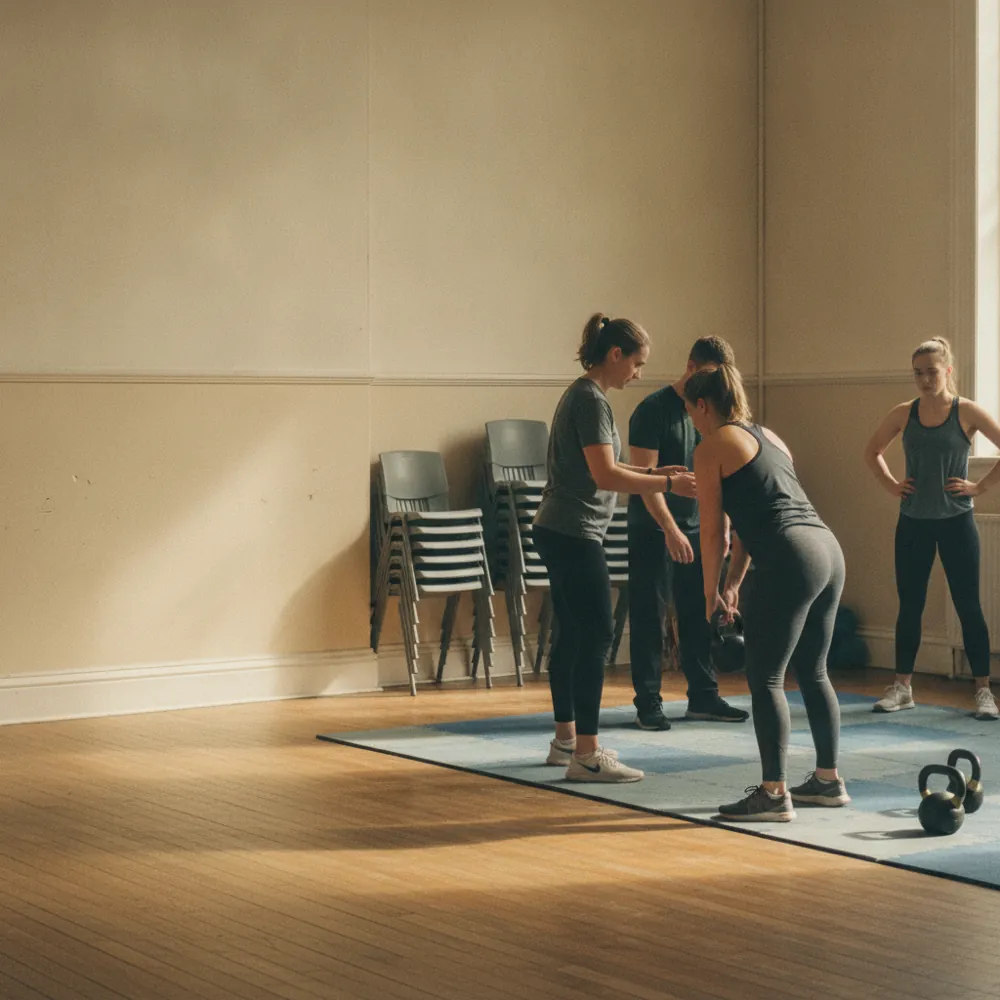
An instructor leading a class on mats and kettlebells in a hired hall, chairs stacked at the side

Blu CircuitsBook online

CircuitsHall, Mon · 8 left$8.00

HIITStudio, Sat · 4 left$10.00

MobilityPark, Wed · 12 leftBook

Next freeMon 6:30 PMWed 9:30 AMSat 8:00 AM

Cap set by the room

18 in the hall

Thirty in the park

Paid at booking

$8.00

No float at the side of a hall

Confirmation

Sent

Email, with the venue on it

How it works for you

Built for a timetable spread across rooms you do not own

Every one of these takes something off an instructor who is driving between venues, without letting a class take more people than the room in front of them holds.

One timetable, whichever room each class is in

Every class on one page with its venue, its time and how many places are left. Somebody who trains with you on Mondays finds the Saturday class without knowing you hire a different building for it.

The Blu Circuits timetable with Monday circuits in the hall and Saturday HIIT in the studio on one page, and somebody who trains on Mondays picking the Saturday class, with four places left

A cap set by the room, not by the class

The same circuits class holds eighteen in the hall and thirty in the park. Set the cap per class so it stops where the space stops, and let the people who missed out wait for a place rather than turn up hoping.

The same circuits class capped at eighteen when it runs in the hall and at thirty when it runs in the park, and the Monday hall class full at eighteen

The class is paid for while it is being booked

With no reception there is nobody to take money at the door, so it is taken at the booking. A single class is paid for there and then, and on the paid plans a card of ten sits beside it and counts itself down, so nobody is carrying a float to a hall.

A single circuits class in the hall paid for at $8.00 as it is booked, with the card of ten offered beside it as the other way to pay

A confirmation that says which building it is in this week

A confirmation when they book, and a reminder the night before on the paid plans, each carrying the venue, the parking, what to bring and a link to cancel, which matters most on the week a class is in a different hall.

The confirmation for Saturday’s HIIT naming the studio rather than the hall, with the parking, what to bring and a link to cancel
The term the hall is not available

A weekly class is set up once and ends when the booking does

A class that runs every Monday for a term is one series with a last date on it, not forty separate entries.

Publish it and the whole run is bookable from day one, so somebody can book three weeks ahead around a shift pattern.

When the hall is not available for half term, that week comes out on its own without touching the rest, and when the term ends the slots free themselves rather than sitting in a calendar as a claim on a room you no longer hire.

This term’s Monday circuits classes in the hall on the timetable from February 8 to March 22, each date with its own places left and bookable on its own, one place booked three weeks ahead, and no class in the half-term week when the hall is not available
Five to seven in the morning

You find out who is coming before you load the car

An instructor with no front desk finds out how many people are coming by counting them when they arrive, which is too late to do anything about either a full class or an empty one.

A booked class is a list you can read at six in the morning: how many, who, and whether the two who booked last week are on it.

On the paid plans you mark who arrived as they come in, so a regular who has quietly stopped is somebody you notice rather than somebody you remember in three months.

The list for Monday’s 6:30 circuits in the hall read at six in the morning, on a laptop and on a phone: fourteen booked of eighteen, D. Marsh booked again, K. Feld booked last week but not this
Monday, 6:05am

You load the car for eighteen and eleven turn up

Five past six on a Monday and you are loading kit for a class you cannot count. Bookings arrived as four messages, two comments under a post and one person who always just comes. Some of them paid last week, some will pay in cash, and one of them told you on Friday she could not make it.

The Saturday class in the hired studio is at the other end of this week, and three people asked at the weekend whether there was room. You have not answered because you were teaching.

Picktime puts every class, in every venue, on one page people book and pay from, so the number in the car is the number in the room, and the answer about Saturday is a page rather than a Sunday evening.

3People who asked about Saturday, still unanswered

6Different ways the bookings came in

Getting started

Your timetable bookable before next week

The hall and the park added as locations, each with the hours you have it
01

Add each venue and the hours you have it

A hall you hire on Monday evenings, a park with no hours at all, a leisure centre studio on Saturday mornings. Add each as its own location with the hours you actually have it, so nothing is ever offered in a room you cannot get into.

A capacity of thirty typed in for circuits in the park, eighteen already set for the hall, and the Monday class set as a weekly series ending 22 March
02

Put the classes on with their real capacity

Add each class with its length, its price and how many that particular space holds, which is a different number for the hall and the park. Set the ones that run weekly as a series with a last date on it.

The booking link added to Instagram, Facebook and the poster in the hall, and a Saturday place booked from the poster’s QR code
03

Put the link where people already follow you

The booking page is a link, so it goes in the Instagram or Facebook bio, on your own site behind a Book Now button, and on a QR code on the poster in the hall. Comments under a post stop being the booking system.

AI receptionist

Nobody can answer the phone during a class, and that is every class

Teach four hours a day and you are out of reach for four hours a day, which is precisely when people ring.

  • Picktime’s AI receptionist picks up 24/7, works out which class and which venue the caller means, gets their details and puts the booking in against the published timetable, so a nineteenth person cannot be told there is room in a hall that holds eighteen.
  • It takes several calls at once, passes one to you when it should, and writes up every conversation in your dashboard, which is where you find the ones taken while you were counting a circuit.
A caller asking about Saturday’s HIIT, the AI receptionist telling them it is in the studio rather than the hall, and booking one of the four places left
What it costs

Start free. Pay when there are more instructors than there are of you.

The free plan is a plan, not a trial. There is no date at which it stops, no card to add, and nothing that quietly turns off in a fortnight.

Free, and it stays free

What one instructor gets without paying

  • One page carrying every venue you teach in
  • A place count that stops where the room does
  • A weekly class entered once and published for the term
  • An email whenever somebody books or drops out

Start free

Works with what you use

Your teaching week and the rest of your week, in one calendar

One calendar for both jobs

Most instructors teach around something else, and the collision is always with the other thing. Connect the calendar you already live in and every class shows there too, so a Thursday shift or a school pickup blocks the hour instead of quietly competing with it. A booking widget puts the timetable on your own site and online sessions get their own link.

Readable before you unload

The apps for iOS and Android and the phone browser all show the same list, so the count for the six-thirty is on the screen in the car before the kit comes out of the boot.

Questions

Fitness class booking: common questions

What is the best app for scheduling fitness classes?

If your classes are all in one building, most of them will do. If they are not, say a hall, a park and a hired studio, the thing to test is whether each venue can keep its own hours and its own capacity on one timetable. Picktime does that, and people book from a page rather than an app they have to install.

What is the best booking app for gyms?

A gym has a front desk, a membership and a building, so its needs are different from an instructor’s. Picktime covers both cases (classes with a cap, one-to-one sessions and more than one site) and the free plan is enough to run a timetable before deciding.

What CRM do gyms use?

That is usually a separate question from booking, and worth keeping separate. Picktime keeps client records alongside the diary (contact details, what somebody has booked, what you asked them when they first came), which is what most instructors actually need rather than a sales pipeline.

What are the best booking platforms for classes?

The ones that let somebody book and pay in the same step, cap the class where the room does, and offer a returned place to whoever is waiting. Those three between them are most of what a class timetable needs; everything else is preference.

Can each venue have a different class size?

Yes. Capacity is set per class, so the same circuits session can stop at eighteen in the hall and thirty in the park. The page shows how many places are left and stops taking bookings when the last one goes.

Can I sell a card of ten classes?

Yes, on the paid plans. A class pack is paid for once and counts itself down as it is used, so a regular books each week without paying again and you can see how many they have left. Single classes sit beside it, paid at the moment of booking.

What happens when somebody cancels a class the night before?

The place goes straight back on sale, which is what turns a message at nine at night into a filled space rather than a gap you find out about at six in the morning. A waiting list, so the place is offered to whoever wanted it first, is on the paid plans.

Stop counting the class as people walk in

Free forever for one instructor. No card, no trial clock, and every venue can be on one timetable before next week.