Free ophthalmology scheduling software that books the machine as well as the clinician

An ophthalmology appointment is a room, a clinician and a machine, and the machine is usually what runs out first. Picktime books all three together, so a field test is never offered at an hour when the field-test unit is already in use. A cancellation puts the room, the machine and the half hour back on the page, and patients book their own appointment without ringing the clinic.

  • Free forever plan
  • Patients book online
  • No card required
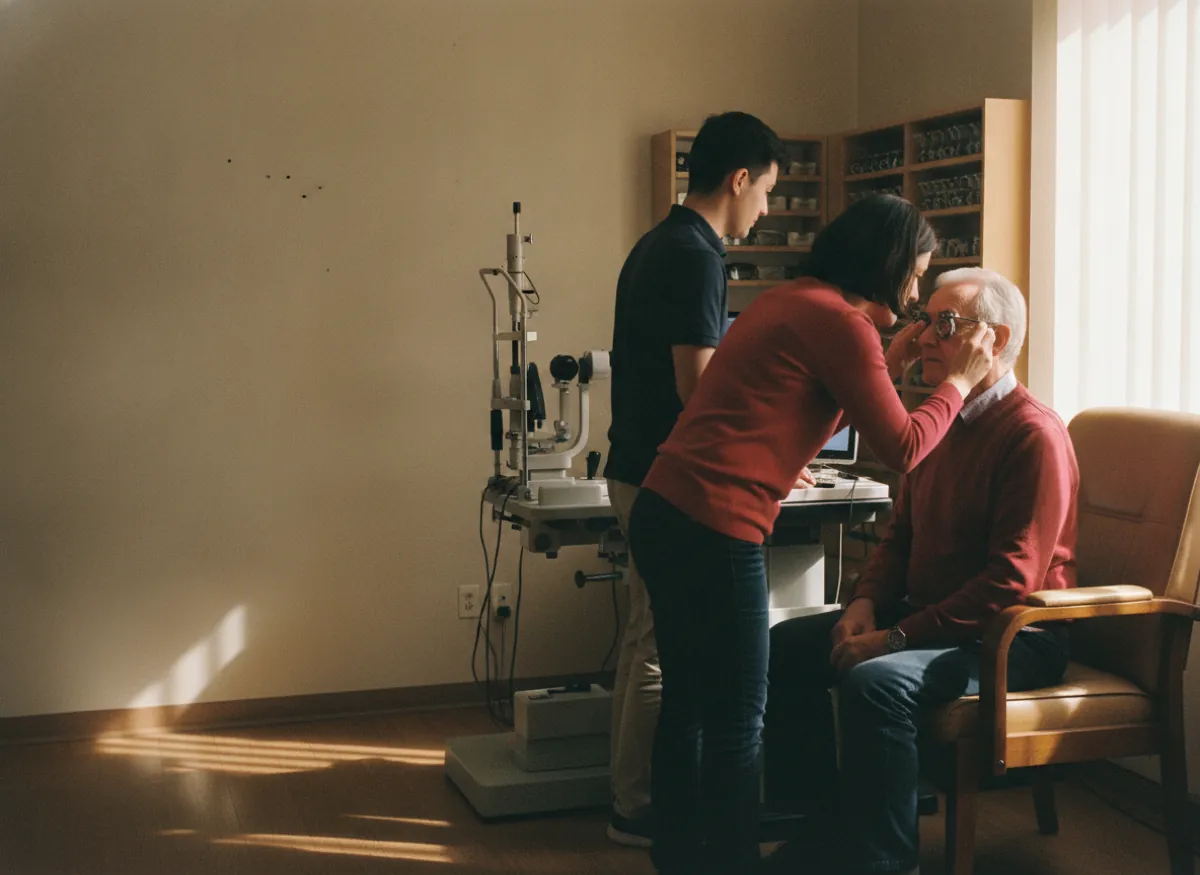
An optometrist testing a patient at the phoropter in the consulting room, the slit lamp set on the other side of the chair

Blu EyecareBook online

Eye examination30m · Room 1$70.00

Contact lens fitting45m · Paige$90.00

Field test20m · Unit 1Book

Next free9:20 AM12:10 PM4:00 PM

Booked online

11:04 PM

While the practice was closed

Deposit

$22.50

25% on the lens fitting

Room and machine

Both free

Or the slot is not offered

How it works for you

Built for how an ophthalmology clinic actually fills its rooms

Every one of these keeps a room, a machine and a clinician together, and keeps a patient who is due back from quietly not coming back.

The scanner is booked with the appointment that needs it

Machines are booked in their own right alongside the clinician, so a field test only appears at hours when the unit is free. Two patients can never be sold one machine at twenty past nine.

A field test offered only at the times the optometrist and field-test unit 1 are both free: 09:20 already taken, 10:00 picked, and the unit held for it

Next year’s test is booked before this year’s ends

On the paid plans a yearly eye examination or a six-month check books as a recurring appointment while the patient is still in the chair, so a recall is something in the diary rather than a list somebody works through.

A yearly eye examination set to repeat every 12 months while the patient is in the chair on Tuesday, November 10, 2026, with next year’s test booked for Wednesday, November 10, 2027

A booking page that knows a lens fitting is longer than a test

A routine examination and a contact lens fitting are different lengths at different prices, offered as such. Patients pick from the times the practice genuinely has, at whatever hour they think of it.

The Blu Eyecare booking page with each appointment at its own length and price: an eye examination at 30 minutes, a contact lens fitting at 45 and a field test at 20

What they wear now arrives with the booking

On the paid plans the booking form asks about their current prescription, symptoms and medication. The answers sit on the appointment, so the pre-screen starts from something rather than from nothing.

The booking-form answers on an eye examination: current prescription, symptoms and medication, each answered as the patient booked and kept on the appointment
Eye surgery appointments

Eye surgery appointment scheduling is not the same job as a sight test

Optometry and ophthalmology are two professions, and they book differently. An optometrist tests sight and fits lenses, which is what optician scheduling is built around. An ophthalmologist is a doctor: the surgical consultation, the pre-operative check, the injection clinic, and the post-operative review a fortnight later. Those are four appointment types of four lengths, and the person who takes one of them often takes none of the others.

In Picktime each clinician keeps their own hours, their own days and their own list of what they take, so a booking page never offers a consultant appointment on an optometrist’s Tuesday and never puts a collection into a testing room that is needed for something else.

The consultant’s own list on Wednesday afternoons: surgical consultation, pre-operative check, injection clinic and post-operative review offered with them, and the sight test left to the optometrist
When a test slot frees up

The half hour somebody cancels does not have to sit empty

Testing rooms are the practice’s capacity, and a cancellation is only a loss while nobody else can see that the slot exists. A patient cancelling from their own confirmation releases the room, the machine and the clinician together, and the half hour goes back onto the booking page for anybody looking for a test this week. If you run clinics at more than one branch, each site keeps its own rooms, its own machines and its own hours, and they all appear in the same calendar.

A Wednesday 15:00 field test cancelled by the patient from their own confirmation, the room, the machine and the optometrist shown free again in the practice diary, and the half hour open to book on the booking page
Wednesday, 9:20am

Two patients are booked on one field-test machine

Twenty past nine on a Wednesday. Two patients are in reception, both booked for a visual field test, and the practice has one unit. Both appointments are real, both were made by people who could see the clinician’s diary and neither of whom could see the machine.

Somebody will be sent home, and the practice will find another slot for them in three weeks. On the same morning, four people who were due a yearly test twelve months ago will not come, because a recall list is only as good as the afternoon somebody spends working through it.

Picktime books the machine with the clinician, so the second appointment was never offered. On the paid plans it books next year’s test while the patient is still sitting in the chair, so the recall is in the diary rather than on a list.

Getting started

Your practice taking bookings before the afternoon clinic

A routine examination, a contact lens fitting, a field test and a collection added with their lengths and prices, the field test set up against unit 1
01

Add your appointments, clinicians, rooms and machines

List a routine examination, a contact lens fitting, a field test and a collection with real lengths and prices. Set which clinician does what and the hours they work. Add the testing rooms and the machines as resources.

The optometrist’s hours set to Monday to Friday, a patient able to move their own appointment up to 24 hours before, and a yearly test set to fall 12 months on
02

Set your hours, and what patients can change themselves

Set the hours each clinician works and how late a patient may move their own appointment. On the paid plans, say how far ahead a yearly test or a six-month check falls so it books while the patient is still there, and write the questions the form asks about their current prescription, their symptoms and their medication.

The booking link added to the practice website, Google, a social media bio and the recall letter, and an eye examination booked from Google at 22:00
03

Put the link where patients already look

The booking page is a link, so it goes on the practice website behind a Book Now button, in your Google Business profile so local searches land on it, in your social media bio and in the recall letter itself.

AI receptionist

Reception is dispensing and the phone rings anyway

In a small eye practice the person on reception is also the person fitting frames, and the phone rings while they have somebody at the display. Picktime’s AI receptionist answers around the clock, takes the caller through what they need, captures their details and turns the call into a confirmed appointment, checked against the same availability the booking page uses, so it can never offer a field test when the unit is already booked. It transfers to the practice when somebody needs a person, and every call is transcribed into your dashboard, so an enquiry taken while the shop was busy is still readable when it is not.

A caller asking for a contact lens fitting while reception is busy, booked by the AI receptionist into a 45-minute fitting at 16:00, then put through to the practice with a question about frames
What it costs

Start free. Pay when there are more clinicians and more branches.

The free plan is a plan, not a trial. There is no date at which it stops, no card to add, and nothing that quietly turns off in a fortnight.

Free, and it stays free

What a single-practice optometrist gets without paying

  • Your own booking page, with your real appointment lengths on it
  • Testing rooms and machines booked alongside the clinician
  • Patients booking, moving and cancelling their own appointments
  • Email notifications on every booking

Start free

Works with what you use

It fits the calendar and the tools an eye practice already runs

Nothing gets typed in twice

An appointment lands in the calendar your clinicians already have open, and the paid plans sync it both ways, so when it moves there it moves here. Your customer list connects to the tools the practice already uses, and the Book Now button drops into the website you already run.

It runs from a phone

Picktime runs in a browser on a phone as well as a laptop, and there are iOS and Android apps, so somebody in the dispensing area can see the afternoon without walking back to the desk.

Why ophthalmology practices choose Picktime

Picktime is free online scheduling software for ophthalmology practices and eye clinics.

Balancing patient appointments against clinician schedules is the hard part of running an eye practice: it is not only about booking appointments but about staying organised, supporting the team and giving patients an examination that starts on time. Just as the wrong lens makes vision blurry, running everything without a single place to look becomes overwhelming quickly.

Picktime automates the scheduling half. You can list as many services as you offer on an online booking page, each with its availability, price and duration, and patients schedule their own eye appointment without contacting you, seeing real-time availability, clinicians and locations.

Email notifications go out the moment an appointment is made, and the paid plans add reminders before it, service and team-specific booking links and QR codes that take a patient straight to the right thing, recurring appointments for a yearly recall, and automatic timezone conversion for anybody booking from elsewhere.

Your team set their own working hours, breaks and days off under permissions you choose, several locations run under one account, a Book Now button turns your own website into a booking page, and pasting the link into your Google Business profile is what puts your eye care services in front of the people searching locally for them.

Questions

Ophthalmology scheduling: common questions

What is the best ophthalmology practice management software?

It depends on how much of the practice you want in one tool. A full optometry suite carries clinical records, dispensing and stock. Picktime covers the diary: appointments with real lengths, the machine and the room booked with the clinician, and patients booking themselves. It is free for a single practice, with recalls booked a year ahead on the paid plans.

Is there free scheduling software for an eye practice?

Picktime’s free plan includes your own booking page with real appointment lengths, testing rooms and machines booked alongside the clinician, patients booking and moving their own appointments, and email notifications on every booking. Booking-form questions, recalls and reminders sit on the paid plans. No card, and no date at which it stops.

Can I stop two patients being booked on the same machine?

Yes, and it is the most common way an eye practice double-books itself. The field-test unit and the retinal scanner are bookable resources in their own right, so an appointment that needs one only appears at hours when that machine and the clinician are both free.

Can I book next year’s recall while the patient is here?

Yes. A yearly examination or a six-month check books as a recurring appointment before they leave, so a recall is something in the diary rather than a list somebody has to work through on a quiet afternoon. Recurring bookings are on the paid plans. A practice that lives on this entirely is an orthodontist booking the next adjustment before the patient is out of the chair.

Can different clinicians offer different appointments?

Yes. An optometrist, a consultant ophthalmologist and a dispensing optician each keep their own hours, their own days and their own list of what they take, so the booking page never offers a consultant appointment in an optometrist’s clinic.

Can I run more than one eye practice?

Yes. Each branch keeps its own rooms, its own machines, its own clinicians and its own hours, with its own booking page, and all of them show in one calendar. Multiple locations are on the paid plans.

Can patients book an eye test online without ringing?

Yes. The booking page shows your real availability, the clinician and the branch, and it is a link, so it sits on the practice website, in your Google Business profile and in the recall letter, and somebody can book at ten at night when the practice is shut.

Stop selling one machine to two patients

Free forever for a single practice. No card, no trial clock, and patients can be booking their own eye test this evening.