Every court, every slot, on one page
Your courts and the slot lengths you actually sell: sixty minutes, ninety, two hours. Players see what is genuinely free tonight and take it, instead of messaging the club to ask.
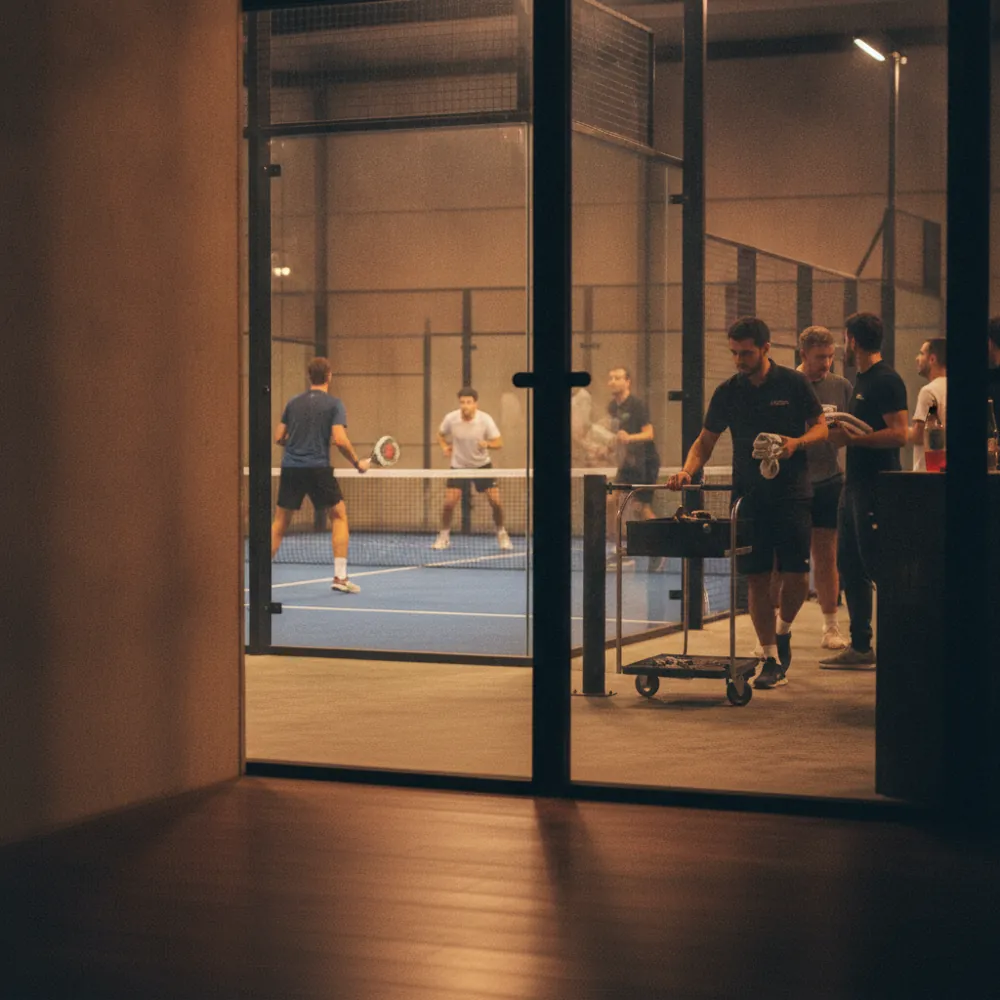
Padel is doubles, so a court booking is really four people and one of them paying. Players book the court themselves, pay for the slot while they are there, and coaching sits on the same calendar as open play, so a coach cannot be booked onto a court that a four-ball already has.

Blu PadelBook online
Court, open play90m · Court 2$32.00
Coaching1h · Leo$45.00
Club night2h · 12 placesBook
Next free6:00 PM7:30 PM9:00 PM
Booked online
11:04 PM
While the club was closed
Court fee
$32.00
Paid before the slot was held
Court and coach
Both free
Or the lesson is not offered
Everything on this page exists because a padel booking is not one player and one hour. It is a group, a court and usually somebody chasing three people for money.
Your courts and the slot lengths you actually sell: sixty minutes, ninety, two hours. Players see what is genuinely free tonight and take it, instead of messaging the club to ask.
A court taken by a four-ball is one booking with four names on it. An Americano or a club night is a session with places, counting down as people join, so nobody has to work out who is in from a group chat.

Take the court fee when the booking is made: through PayPal on the free plan, or Stripe or Square on the paid ones. The slot is held once the money has gone through, which is the difference between a court booked and a court somebody meant to book.
On the paid plans the Tuesday group books as a series with a last date on it rather than a permanent claim on the court. When the block finishes the slot goes back into the evening without anybody remembering to clear it.
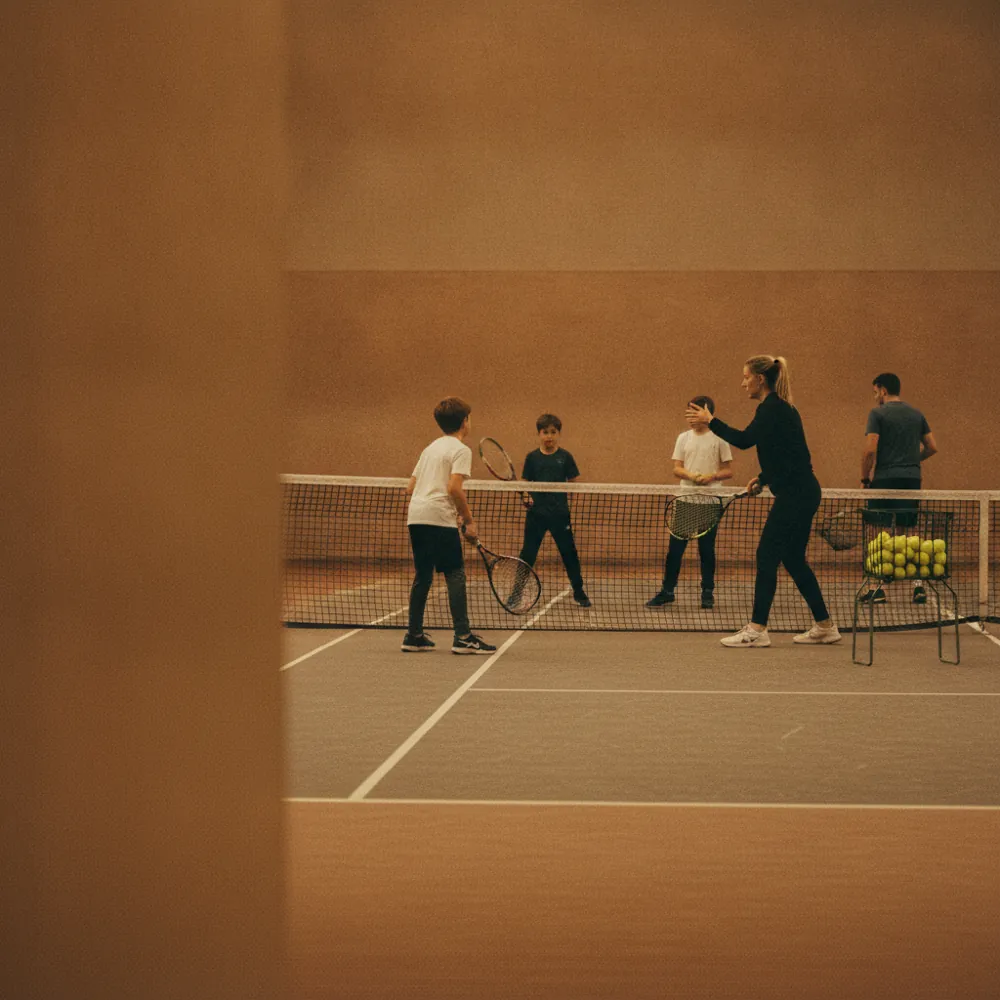
Coaching is the thing that collides with everything else, because it needs a court and a coach at the same time and the court is the scarce one.
Picktime holds both against the same booking, so a lesson is only offered in an hour when the coach is free and a court is free with them. Block a court for club nights and it stops being sold as open play; free it up and it is back that minute.
Each court keeps its own hours, so an indoor court that runs to eleven and an outdoor one that stops when the light goes are not treated as the same thing.
A four-ball that falls apart at half five is the most expensive hour a padel club has, because it is the hour everybody wants.
The confirmation carries a link to cancel, so the person who booked can hand the slot back themselves rather than meaning to ring you.
The moment they do, the court is back on the page for the next person looking at their phone on the way home from work, and you decide how late a cancellation is allowed to happen, per court, so nobody hands back a floodlit Friday at ten to eight.
Ten past six on a Tuesday. Four players are standing behind court two with their bags, and there are four other people already on it. One booking came through the club’s WhatsApp on Sunday. The other was written on the sheet in the office by whoever was on the desk on Monday.
Both of them are right, as far as either of them knows. Neither of them can see the other, because the two lists have never been in the same room.
Picktime puts every court on one page that players book from themselves, takes the fee at the moment of booking, and stops offering a slot the second it is taken.
4Players who go home, two of them new
90 minOf the best court in the week, unsold
Add each court with the hours it can be booked and the slot lengths you actually run: ninety minutes for open play, an hour for coaching. Indoor and outdoor courts can keep different hours.
Set how far ahead a slot opens, how long a booking can be and how late somebody may cancel, per court. That is what stops the whole of next month being taken at seven on a Monday morning.
The booking page is a link, so it goes on the club site, in the WhatsApp group description and on a QR code by the courts. The message asking whether Tuesday is free stops being a message.
Padel clubs are busiest when there is nobody in the office, and the calls that come in then are the ones from people who have never played.
The free plan is a plan, not a trial. There is no date at which it stops, no card to add, and nothing that quietly turns off in a fortnight.
A court booking lands in the calendar your coaches already have open, and the paid plans sync it both ways, so when it moves there it moves here. Put a Book Now button on the club site so a player checking tonight never has to leave it, and take the fee through PayPal, or through Stripe or Square on the paid ones.
Picktime runs in a browser on a phone as well as a laptop, and there are iOS and Android apps, so whoever is locking up can see tomorrow’s courts from the court, not the office.
The clubs that struggle are usually the ones running open play in one place and coaching in another. What is worth testing is whether courts and coaches share a calendar, whether one player can pay for the whole booking, and whether a regular Tuesday four-ball can book as a block. Picktime does all three, and the free plan covers a single-court club, with the recurring block on the paid plans.
Yes. Picktime’s free plan gives you a booking page for your courts, courts and coaches on one calendar, and players handing a slot back onto the page themselves, with no card and no end date. Recurring blocks and reminders sit on the paid plans. The booking page runs in any phone browser and there are iOS and Android apps.
Yes, and that is the normal case in padel. The booking is made and paid for once, by whoever organised it: through PayPal on the free plan, or Stripe or Square on the paid ones. The court is held from the moment the payment goes through.
Yes. A lesson needs a coach and a court together, so Picktime only offers an hour when both are free. Blocking a court for a club night takes it out of open play for that hour and puts it back the moment the block ends.
Set how far ahead bookings open and the longest slot a player may take, per court. A court that opens seven days ahead cannot be claimed for August in April, which is what keeps peak evenings reachable for people who are not on their phone at seven in the morning.
Yes. Every confirmation carries a link to cancel, and you decide how late that is allowed. A slot handed back goes straight back on the page, which is the whole reason it is worth letting people do it themselves.
Yes. Each site keeps its own courts, its own hours and its own booking page, and all of them show in one calendar, so a club with two venues is looking at one evening rather than two systems.
Courts by the hour Singles, doubles and coaching on courts that all want the same six o’clock.
See tennis court scheduling
Blocks and leagues Weekly league blocks that end on a date, and casual hours around them.
See sports facility scheduling
Classes and floor Classes with a cap, personal training, and a floor that fills at six.
See gym schedulingFree forever for a one-court club. No card, no trial clock, and players can be booking this evening.