A diary for every booth you own
Two booths are two lines, so the second enquiry for the fourteenth of June is a booking rather than an apology. When both are gone, the date stops being offered instead of being promised twice.
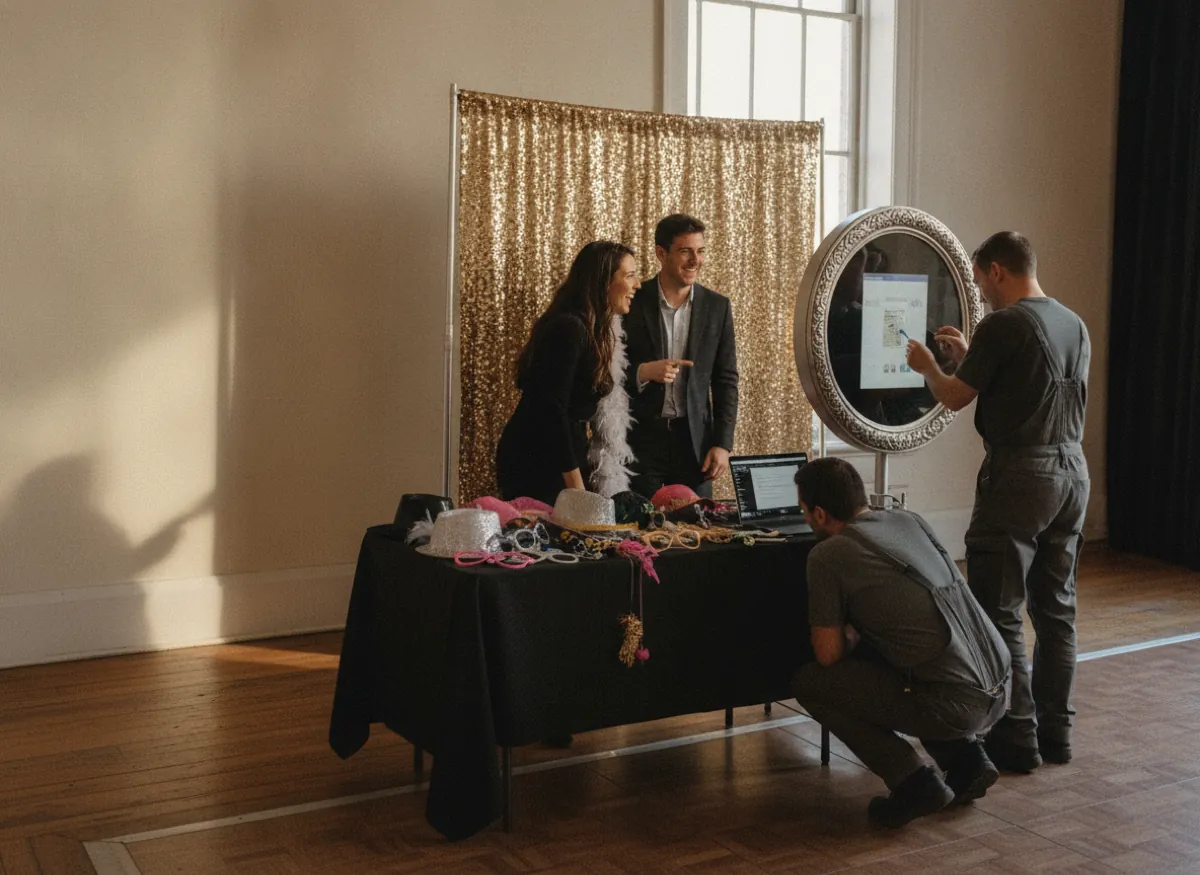
Each booth you own gets a diary of its own, so a Saturday in June can only be sold once. The deposit is taken at the moment somebody books, the attendant and the backdrop are held with the booth, and it is held for the whole block you sell rather than for the hours it is switched on.

Blu BoothsBook online
Mirror booth4h · With attendant$650.00
Open-air booth3h · Load-in 5 PM$480.00
Sequin backdropHeld with the boothBook
Dates left7 Jun21 Jun5 Jul
Booked online
11:04 PM
While you were at a venue
Deposit
$162.50
25% on the mirror booth
Booth and attendant
Both free
Or the date is not offered
A photo booth business is a diary problem wearing a camera. Every good date is asked about by several people, and only one of them ever pays.
Two booths are two lines, so the second enquiry for the fourteenth of June is a booking rather than an apology. When both are gone, the date stops being offered instead of being promised twice.
Take a deposit at the moment somebody books (through PayPal on the free plan, or Stripe or Square on the paid ones), and raise an invoice for the balance from the same record. A Saturday held with money is a Saturday you can count on in January.
On the paid plans you add your own questions to the booking form, including venue, access time, where the power is, what the print should say, whether there are stairs. It all arrives with the booking instead of in nine messages in May.

A confirmation when they book carries the arrival time and a link to change the details, and on the paid plans a reminder before the date carries the same. That is how a venue change in April reaches you before the van is loaded in June.
Most hires need somebody with the booth for the evening, and on the Saturdays that matter that person is the thing you run out of first. Picktime holds the attendant against the booking as well as the booth, so a date is only offered when both are free. Backdrops, props and prints that only exist once are bookable in their own right, so the vintage backdrop cannot be promised to two weddings on the same weekend. The booth is held for the whole block you sell, including load-in, the evening and load-out, rather than only for the hours it is switched on.
Nothing else in this trade has a gap like it: the booking is made in January, the venue changes in March, the timings move in April and the event is in June. Every booking keeps the customer, the date, the answers they gave and the payments against it in one record, so the person you speak to in May is not somebody you have to reconstruct from a thread. Repeat work from venues and wedding planners sits under the same record, which is what makes a second booking from the same hotel something you can see rather than something you remember.
Half four on a Saturday in June. Both of today’s hires want the mirror booth. One was agreed on Instagram in February, one by email in March, and neither of those conversations knew the other existed.
You have an open-air booth as well, and the couple who asked for the mirror one paid extra for the mirror one. One of these two evenings is going to be a refund and a review.
Picktime gives each booth its own diary, holds the attendant with it, and takes the deposit at the moment the date is claimed.
A line per booth, plus your attendants, backdrops and anything else that only exists once. Set the block you actually sell, load-in to load-out, so a date is held for the whole of it.
Decide what has to be paid to hold a date, and how late it may be cancelled. On the paid plans, add the questions you need answered (venue, access time, power, stairs, what the prints say), and make the important ones compulsory.
The booking page is a link, so it goes on your site behind a Book Now button, in your Instagram bio and in the reply to a wedding fair enquiry. The date gets held while they are still interested.
Every call you miss is on a Saturday, and every Saturday you are on a ballroom floor running cable. Picktime’s AI receptionist answers around the clock, takes the caller through the date and which booth they want, captures their details and turns it into a confirmed booking. It works against the same diaries the booking page uses, so it cannot sell a booth that is already out that day. It transfers to you when somebody genuinely needs a person, and transcribes every call into your dashboard, so the enquiry that came in at seven while you were taping down a mat is still there on Sunday.
The free plan is a plan, not a trial. There is no date at which it stops, no card to add, and nothing that quietly turns off in a fortnight.
A booking lands in the calendar you already have open, and the paid plans sync it both ways, so when it moves there it moves here. Put a Book Now button or a booking widget on your own site so an enquiry from a wedding fair can hold a date rather than start a thread.
Picktime runs in a browser on a phone as well as a laptop, and there are iOS and Android apps, so you can check next Saturday’s address from a loading bay rather than from a desk.
It is worth separating the two things the phrase covers. The software that runs the booth itself (the camera, the prints, the overlays) is one product. Getting a date held and a deposit taken is a different one, and that is what Picktime does, free for a single operator, with the venue details collected on the booking form on the paid plans.
Yes. Picktime’s free plan gives you a booking page for every booth, a diary per booth and attendant, and a deposit taken through PayPal, with no card and no end date. Your own booking-form questions and reminders sit on the paid plans. There are iOS and Android apps as well as the browser version.
The tools written for this trade tend to bundle the booth software, the gallery hosting and the diary into one monthly figure. If you only need the diary, Picktime is free for one operator with no card and no end date, and the plan comparison is on the pricing page.
Yes, and it is the default. Each booth is its own diary, so a date that is taken on one booth stops being offered on that booth, while the second booth stays available for the next enquiry.
Yes, through PayPal on the free plan or Stripe or Square on the paid ones. Take a fixed deposit or a percentage at the moment of booking and raise an invoice for the balance from the same record, which is what makes a June Saturday booked in January worth something.
Yes, on the paid plans. Put your own questions on the booking form (venue, access time, where the power is, whether there are stairs, what the prints should say), and make the ones that matter compulsory, so nothing is chased in May.
Yes. Attendants, backdrops and anything else you only own one of are bookable in their own right, so a date is only offered when every part of the package is genuinely free.
Two different products get called this, and a photo booth business ends up buying both. Booth software is what runs on the machine at the party: it fires the camera, lays out the print template, applies the green screen and lets guests text themselves a copy. Picktime is the other half, the diary that sells the Saturday and takes the deposit, and it makes no attempt to drive the camera.
For the app running on the iPad inside the shell, pick on what your prints have to look like and how guests share, because that is where the differences between capture apps actually are. None of them will stop you selling the same booth to two weddings in June, which is a diary problem rather than a camera problem. That is the part Picktime handles, alongside the attendant, the backdrop and the deposit that holds the date.
Nights and sets Saturdays booked a year out, held by a deposit rather than a promise.
See DJ booking scheduling
Dates and suppliers One date, a dozen suppliers, and a record that survives eighteen months.
See wedding planner scheduling
Kit and dates Kit booked out against the date that needs it, and back before the next one.
See party rental schedulingFree forever for one operator. No card, no trial clock, and next summer can be bookable this week.