Free physical therapy scheduling software that books the plinth as carefully as the therapist

A physiotherapy clinic runs out of space long before it runs out of therapists. Two plinths, a gym floor and one piece of equipment everybody wants at four o’clock is a scheduling problem that a diary of people cannot see. Picktime books the space alongside the person, and runs your rehab classes as capped sessions on the same calendar.

  • Free forever plan
  • Space booked with the therapist
  • No card required
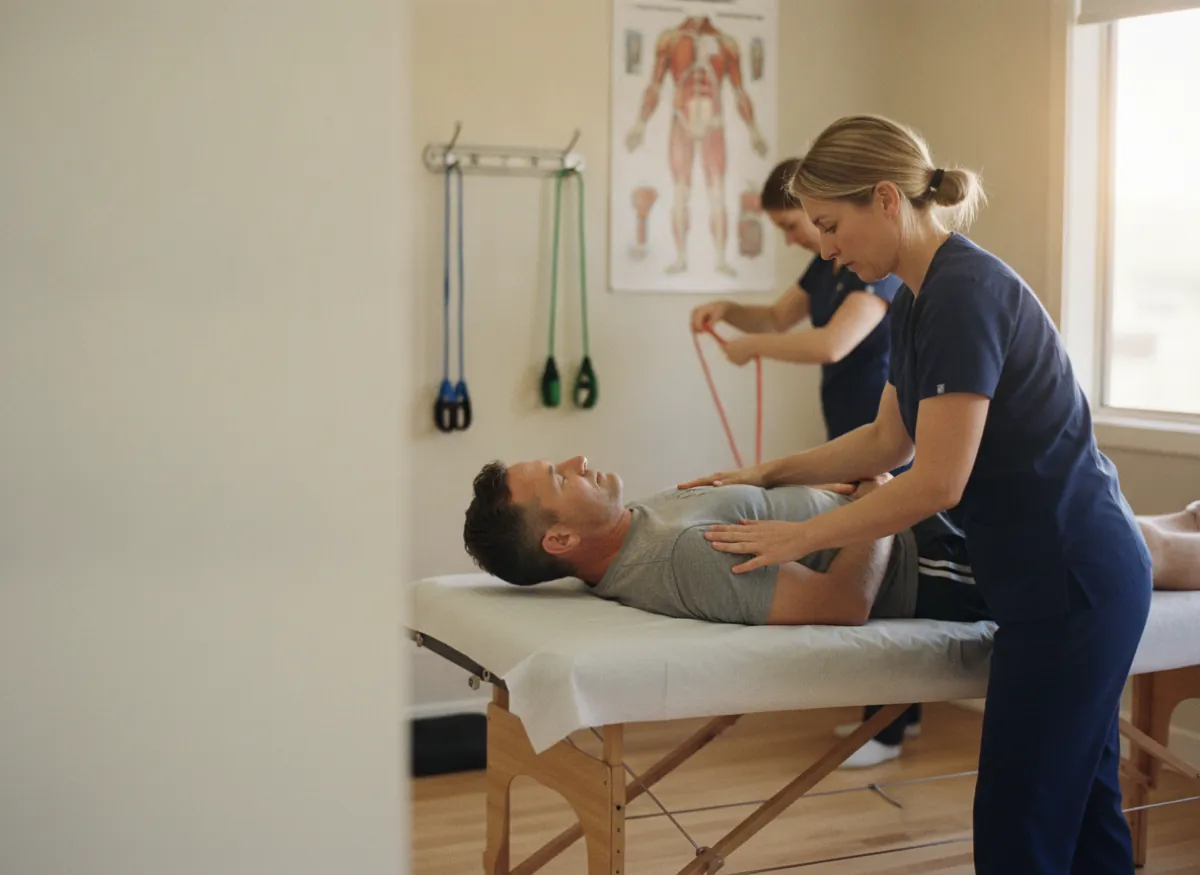
A therapist working with a patient on the treatment plinth, folded towel to hand and resistance bands on the hook behind

Blu RehabBook online

Assessment45m · Plinth 2$70.00

Follow-up30m · Plinth 2$48.00

Back classTue 6 PM · 6 of 8Book

Next free8:30 AM11:00 AM4:00 PM

Booked online

10:40 PM

While the clinic was shut

Paid at booking

$70.00

The assessment, on the page

Plinth and therapist

Both free

Or the slot is not offered

How a clinic really runs out of room

Built for a clinic where the constraint is the floor, not the diary

Four things that a list of therapists cannot tell you and that decide how many people you can actually see.

The plinth, the floor and the equipment are booked too

A session that needs the gym floor is only offered when the floor and the therapist are both genuinely free. Two therapists are never sold the same space at four o’clock.

A return-to-running assessment offered only when a therapist and the gym floor are both free: 16:00 and 16:30 struck out because the floor is in use, and 17:15 picked

Rehab classes capped at the places you actually have

A group rehab class has a number of places and a limit that matters. People book their own, and a full class stops taking bookings rather than filling the floor past what one therapist can watch. A waiting list, and a register you mark as they arrive, sit on the paid plans.

The Blu Rehab booking page with the back class capped at eight places: Tuesday 10 November has six booked and is still open, Tuesday 17 November has all eight and has stopped taking bookings

An assessment is longer than the sessions that follow it

The first appointment takes the time an assessment takes and is priced accordingly; the sessions after it are shorter. Each type carries its own length, so a day of follow-ups fits into the day.

Two appointment types with their own lengths and prices, a 45-minute assessment at $70.00 and a 30-minute follow-up at $48.00, and a morning from 8:30 to 12:30 fitting one assessment and six follow-ups

A block of sessions booked at the assessment

On the paid plans, set the follow-up to repeat and every week is generated forward on the therapist who did the assessment. The patient leaves with the whole block rather than rebooking each time, and every date is confirmed by email as it is made.

A follow-up set to repeat weekly six times from Tuesday 3 November, every date held on the therapist who did the assessment and each one confirmed by email
Therapists and specialisms

A hand therapist is not offered for a knee

Not every therapist does every kind of work, and a patient who books the wrong one has wasted the appointment even though it happened. Each therapist in Picktime sets their own hours and their own list of what they treat, so a patient choosing a musculoskeletal assessment sees only the people who do them and only at times they have. Where somebody works two days here and three days somewhere else, the two diaries do not collide, because their hours are set once and the page can only offer what is in them.

A patient choosing a musculoskeletal assessment is offered only the two therapists who do them, each on their own days, and the hand therapist is not offered
Sessions on a screen

A follow-up that does not need the plinth does not need the clinic

Plenty of what happens after the third session is a conversation and a look at an exercise: a progress check, a programme review, a return-to-sport conversation. On the paid plans, mark the appointment type as an online session and the Zoom, Meet or Teams link is created with the booking and sent to the patient in the same message, so the appointment costs nobody a car journey and costs the clinic no space at all. On the same plans a patient in another time zone sees their own local time on the page, which matters more than it sounds for anybody working away.

A Thursday 15:00 progress check set as an online session: no plinth held in the clinic diary, the video link sent in the patient’s confirmation, and the booking page showing the patient 19:00 in their own time zone
Wednesday, 4:00pm

Two therapists, one gym floor, and a class due to start on it

Four o’clock on a Wednesday, which is the hour everybody who works wants. One therapist has taken a patient onto the gym floor for a return-to-running assessment. Another has just brought somebody through for exactly the same reason, and the back class starts on that floor at half past.

Every one of those three bookings was correct in a diary of people. None of them knew about the others, because the thing they were all competing for was not in the diary at all. Picktime books the space with the person, so the second assessment was never offered at four and the class had the floor it was promised.

Getting started

A clinic whose spaces are as bookable as its people

A therapist added with her hours and what she treats, then plinth 2, the gym floor and the one treadmill added as spaces held alongside whoever is using them
01

Add your therapists, your spaces and your equipment

Set each therapist’s hours and what they treat, then add the plinths, the gym floor and anything there is only one of, so they are held alongside whoever is using them.

The back class set to eight places, the number the gym floor holds, with bookings stopping at eight of eight, and the notice a patient must give to move a session set
02

Set the assessment, the follow-up and the classes

Each appointment type with the length and price it really has, and each rehab class with the number of places the floor holds. Say how much notice you need and how late a patient may move a session.

The booking link added to the clinic website, the Google Business profile and the reply to a referrer, and an assessment booked from a referral email at 9:12
03

Put the link where patients and referrers reach it

On the clinic website behind a Book Now button, in your Google Business profile, and in the email you send back to a GP or a coach who has just referred somebody, so the assessment is booked rather than promised.

AI receptionist

At four o’clock everybody is on the floor and the phone is ringing

The busiest two hours of a physiotherapy clinic are the two hours nobody can leave a patient to answer a phone, and they are also the two hours people ring in. Picktime’s AI receptionist answers around the clock and takes several calls at once, works through what the caller needs, captures their details and turns the call into a confirmed appointment in your calendar, checked against the same therapist, room and equipment availability the booking page uses, so it cannot sell the gym floor twice. A caller who needs a person is transferred to you, and every call is transcribed into your dashboard.

A caller booked into a 45-minute assessment at 17:15 with a therapist and plinth 2 both free, then put through to the clinic about a referral
What it costs

Start free. Pay when there are more therapists, not more sessions.

The free plan is a plan, not a trial. There is no end date and no card, and what you pay follows how many of you there are and how many sites you run.

Free, and it stays free

What a single-therapist clinic gets without paying

  • Your own booking page, on your real clinic hours
  • Sessions booked alongside the space they need
  • A record per patient, with every session against the name
  • A cap on every rehab class, and email confirmations

Start free

Works with what you use

It fits the calendar, the video call and the way patients pay

One diary per therapist

Sessions land in the Google or Outlook calendar each therapist already carries, and the paid plans sync both ways so a session moves there when it moves here, which matters for anybody splitting a week between two clinics. Online sessions get a Zoom, Meet or Teams link made with the booking, and payments run through PayPal on the free plan, or through Stripe or Square on the paid ones.

It works on the gym floor

Picktime runs in a browser on a phone as well as at the desk, and there are iOS and Android apps, so a therapist on the floor can see whether the plinth is free at half past, or mark a class register on the paid plans, without leaving the room.

Questions

Physical therapy scheduling: common questions

What software do physical therapists use?

Many clinics run a PT-specific system carrying documentation, home exercise programmes and insurance billing alongside the diary. Picktime is the booking half on its own (therapists, spaces, equipment and capped classes free, with repeating blocks of sessions and reminders on the paid plans), and it is free to start, which is why smaller clinics often begin with it.

Is there free physical therapy scheduling software?

Picktime’s free plan covers a single-therapist clinic: your own booking page, sessions booked alongside the space they need, a record per patient, and a cap on every rehab class. No card, no end date. Waiting lists, reminders and repeating blocks sit on the paid plans, priced on how many therapists and clinics you have.

Can I book a treatment room or a piece of equipment as well as the therapist?

Yes, and it is the thing that most often goes wrong without it. Plinths, the gym floor and any equipment there is only one of are booked alongside the person, so a session that needs the floor only appears at times when the floor and the therapist are both free.

Can we run group rehab classes in the same account?

Yes. A class is a session with a number of places on it. Patients book their own place, and a full class stops taking bookings rather than overfilling the floor. The waiting list, and the register you mark against each session, are on the paid plans. The register is what makes a patient who has drifted out of a six-week block visible before it ends.

Can a patient book a block of sessions at their assessment?

Yes, on the paid plans. Set the follow-up to repeat weekly for as long as the block runs and every date is generated forward with its own reminder, on the therapist who did the assessment. If one week has to move, only that week moves.

Can we run video appointments as well as clinic ones?

Yes, on the paid plans. Mark an appointment type as an online session and the Zoom, Meet or Teams link is created with the booking and sent in the same message. Patients in another time zone see their own local time on the booking page on the same plans.

Where does the information a physiotherapy patient gives at booking go?

It goes onto their record in your account and is used to run the appointment; what the booking form asks for beyond the essentials is yours to set on the paid plans. Requirements such as HIPAA depend on what is held, where it is held and what agreement covers it rather than on any one feature. If they apply to your clinic, ask us what we hold before you set it up rather than assuming either way. Security and trust sets out how data is kept.

What is the best scheduling software for therapists?

It turns on one question: whether the notes and the insurance billing have to sit in the same product as the diary. If they do, a PT-specific system is your answer, and you should expect the diary inside it to be weaker than a dedicated one. If they do not, a booking tool that can hold a plinth or the gym floor alongside the therapist will serve you better, and Picktime is free for a single-therapist clinic. Plenty of practices run both, with the booking in one place and the clinical record in the other.

What is the most used scheduling software?

Not a figure anybody publishes, so we are not going to pretend to one. The tools with the widest reach are general meeting schedulers, and none of them can hold a treatment room against a session, which rules most of them out of a clinic before popularity comes into it. For three plinths and one gym floor, what to test is whether the room is a bookable thing in its own right.

Put the floor in the diary, not just the therapist

Free forever for a single-therapist clinic. No card, no trial clock, and a space that can only be booked once.