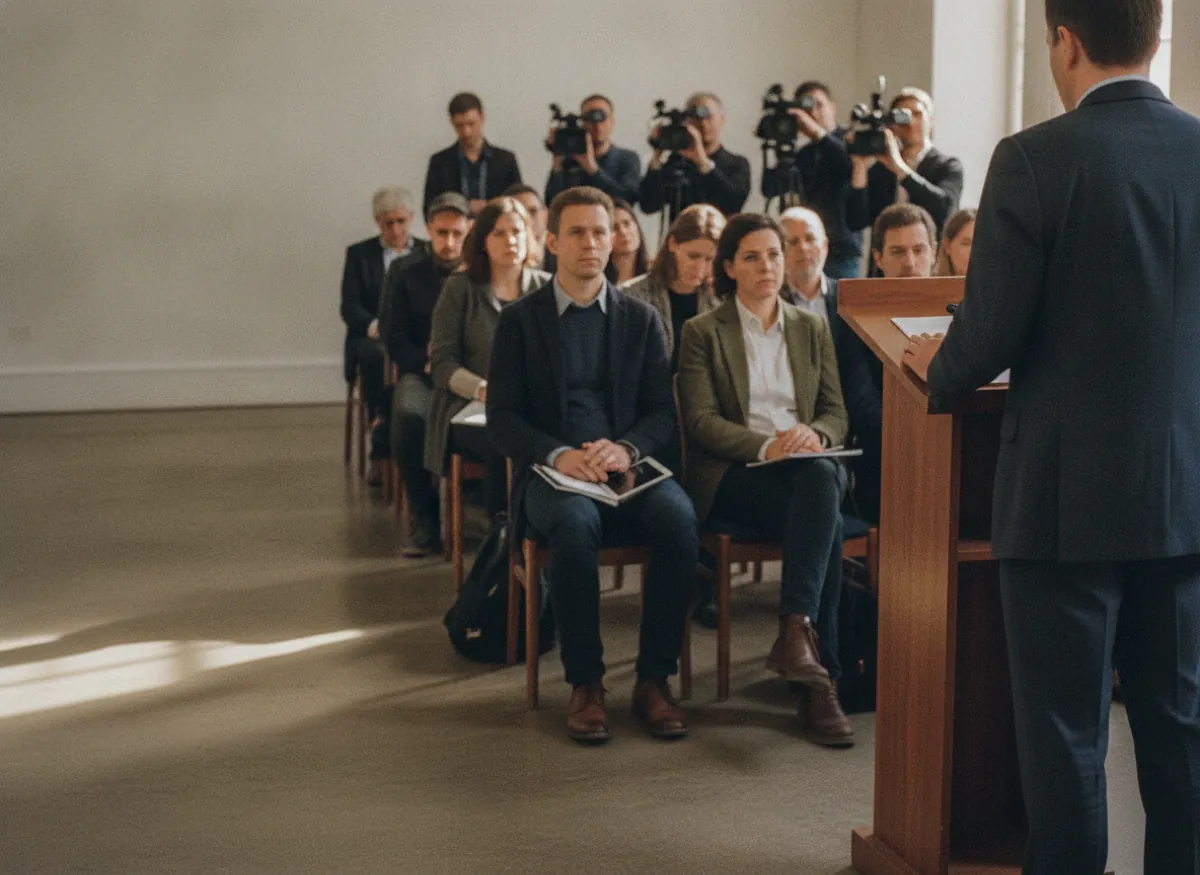
Journalists book an interview slot themselves
Open the spokesperson’s window as bookable slots and send one link to the list. Each journalist takes the twenty minutes that suits them, and the window fills without a single call.
A launch generates two kinds of booking and neither is a meeting. One is a journalist wanting twenty minutes with a spokesperson who has four hours in the whole week. The other is a briefing in a room that holds thirty, which forty people would like to attend. Picktime books both: interview slots taken from the spokesperson’s real availability, and briefings that cap at the room so a thirty-first chair is never sold.

Blu CommsBook online
Interview slot20m · Spokesperson3 left
Launch briefing1h · 30 chairs12 left
Video interview20m · OnlineBook
Next free1:40 PM2:20 PM3:00 PM
Booked online
11:04 PM
By a desk three zones away
Video link
Made
With the booking, not after it
Times shown
Their zone
So nobody joins an hour out
Journalists booking a person, and a room full of people booking an event. The tools an agency usually reaches for do neither.
Open the spokesperson’s window as bookable slots and send one link to the list. Each journalist takes the twenty minutes that suits them, and the window fills without a single call.
Thirty chairs means thirty names, and the thirty-first request is not sold a seat that is not there. On the paid plans a queue holds that desk instead of refusing it, and moves it up the instant somebody drops out.
On the paid plans you check names in at the door and each sits as Arrived, Confirmed, Pending or No-show. The coverage write-up has a real attendance list behind it rather than a sign-in sheet somebody photographed.
Write your own questions on the form, including the publication, the desk, whether they are bringing a camera, whether they need images in advance. It arrives attached to the booking.
Where a slot should not be given away automatically, a request arrives for somebody to approve or decline before it is confirmed, useful on the week an embargo is running.
Media relations breaks down at exactly one point: a chief executive has one Wednesday afternoon and eleven journalists want a piece of it, and the agency spends two days brokering twenty-minute slots by email. Put the window on a page as bookable slots and send the same link to the whole list. Each journalist takes the time that suits their deadline, the slot disappears the moment it is taken, and the confirmation carries the dial-in or the address. Nobody is offered a slot that has gone, which is the sentence an agency otherwise writes eleven times.
Half a media list is somewhere else, and an embargoed briefing quoted in the wrong time zone is a story that breaks early or not at all. On the paid plans the page shows every slot in the journalist’s own local time and books it correctly in the spokesperson’s calendar, and a video interview gets its Zoom, Meet or Teams link generated with the booking and sent on the confirmation. What the agency stops doing is the arithmetic, and what it stops fielding is the message at five past the hour asking where everybody is.
Half eleven on the Monday of launch week. The chief executive has Wednesday afternoon and nothing else, eleven titles have asked for twenty minutes, and the account team is brokering it in a spreadsheet and an inbox at the same time. Two of the offers went out before the spreadsheet was saved.
Picktime turns the window into slots on a page and sends one link to the whole list. A slot taken by anybody stops being offered to everybody, instantly, and the spokesperson’s calendar fills itself in the order the replies arrive.
Give each spokesperson their own hours and open only the window they are actually available in. Set the slot length, twenty minutes or half an hour, and how many can be booked in a day.
Give it a date, a venue and the number the room seats, and a queue behind that. Then decide what the form asks: the title, the desk, whether a crew is coming.
The same page carries the interview slots and the briefing. Put the link in the release and the pitch email, and the window fills in the order the replies come in.
Nothing about the free plan expires and there is no card behind it. Price moves with the number of people you are booking and the number of offices they sit in.
A booked interview lands in the calendar the spokesperson already keeps, and an hour blocked out there stops being offered on the page, which is what stops a journalist taking a slot that no longer exists. On the paid plans Zoom, Google Meet and Teams links are generated with the booking, and media contacts can be kept in step with the CRM and mailing tools the agency already uses.
There are iOS and Android apps and the whole thing works in a phone browser, so names get marked off at the door of a briefing on a handset instead of a printed list on a clipboard.
Yes. Open the spokesperson’s window as bookable slots and send one link to the list. Each journalist takes the twenty minutes that suits their deadline, and a slot stops being offered the moment it is taken.
Yes. Give the briefing the number of chairs there are and the page will not take a thirty-first name as a confirmed one. It holds it in a queue instead, so a title you would rather not refuse is still on the list when somebody drops out.
Yes, on the paid plans. Where a slot should not be given away automatically (an embargoed week, a sensitive announcement), a request arrives for somebody to approve or decline before it is confirmed.
Yes, on the paid plans. Slots are shown in the journalist’s own local time and booked correctly in the spokesperson’s calendar, which is the usual reason somebody joins an embargoed briefing an hour late.
Yes, on the paid plans. Check names in at the door and each sits as Arrived, Confirmed, Pending or No-show, so the write-up has a real attendance list behind it.
Yes, on the paid plans. You write the form questions yourself (the title, the desk, whether they are bringing a camera, whether they need images in advance), and the answers arrive attached to the booking.
Yes. Picktime is free forever to start, with interview slots, briefings capped at the room, video links made on booking and every contact in one place. No card and no end date on it. Time-zone conversion, waiting lists and the door register sit on the paid plans. An agency whose diary is pitches and monthly client reviews rather than interviews and briefings wants booking software for a marketing agency instead.
Events Places capped at what the room holds, and a returned one back on the page.
See live event scheduling
Registrations Delegates registering themselves, and a real list of who walked in.
See business event scheduling
Castings Castings run as timed slots that fill themselves in order.
See modelling agency schedulingFree forever to start. No card, no trial clock, and one link can go out with the release this afternoon.