Ten-minute slots with a limit on how many fit in each
Set how many people a slot can take and the day fills evenly instead of arriving all at once. When a slot is full it stops being offered, so the waiting area holds the number you planned for.
A vaccination session is not a diary of appointments, it is a day cut into ten-minute slots with a limit on how many people can be in the room at once. Picktime publishes the day, caps each slot so the room holds the number you planned for, and books the screened bay alongside the vaccinator so a time is only offered when both are free. The second dose booked with the first, and the consent questions carried on the booking, are on the paid plans.

Blu ClinicBook online
Flu vaccination10m · Bay 2$25.00
Travel vaccination20m · Nurse Hadley$45.00
Dose 2In 8 weeksBook
Next free10:20 AM10:50 AM11:30 AM
10:10 slot
6 of 6
Full, so it stops being offered
Screening
Answered
On the booking, before they arrive
Vaccinator and bay
Both free
Or the slot is not offered
Every one of these turns a crowd into a schedule, without anybody standing at the door counting people in.
Set how many people a slot can take and the day fills evenly instead of arriving all at once. When a slot is full it stops being offered, so the waiting area holds the number you planned for.
On the paid plans a course of two or three doses books as a series at the interval you set, so nobody leaves with only the first one arranged and nobody has to be chased eight weeks later.
On the paid plans the booking form asks about allergies, previous reactions, medication and consent. The answers are on the appointment when they walk in, so the ten minutes is the vaccination rather than the paperwork.
A Saturday clinic in a hall, weekday slots at the pharmacy, a workplace session on a Wednesday. Each site keeps its own hours and its own slots, and people book the one nearest them.

A clinic day is limited by whichever runs out first: the people qualified to administer, or the screened bays they can do it in. Picktime holds both, so a slot is only offered when a vaccinator and a bay are free together, and a day with three bays does not quietly sell four appointments at ten o’clock. Each vaccinator keeps their own hours and their own list of what they are signed off to give, so somebody covering flu only is never offered for a travel vaccination.
Vaccine is a perishable thing and an unused slot on a clinic day is worse than an empty hour in a diary. When somebody cancels from their own confirmation the place returns to the day immediately, where the next person looking at the page takes it. On the paid plans a capped session also keeps a waiting list, so somebody is offered the place rather than finding out at the door that it went. That is how a late afternoon with three no-shows becomes three people who wanted to come and could not get a slot in the morning.
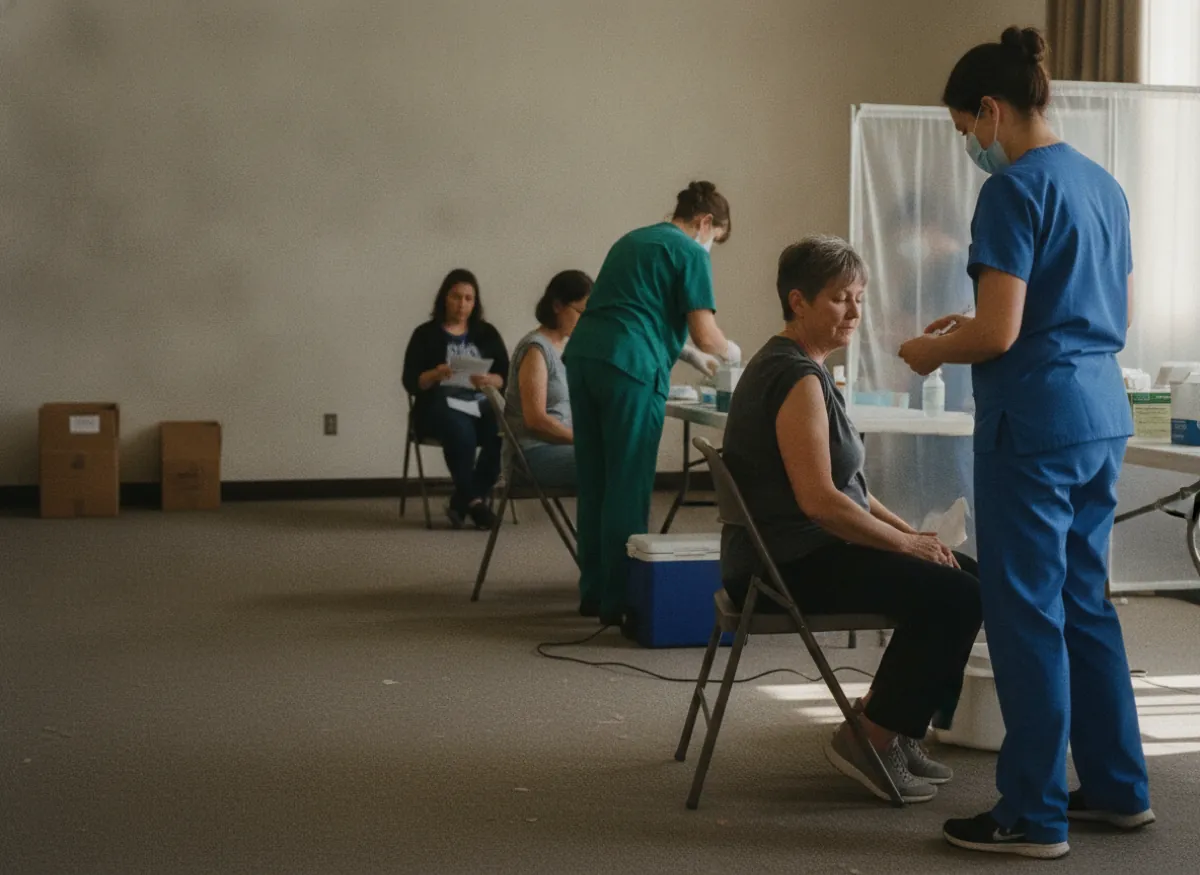
Five past ten on a Saturday. The notice said the clinic opened at ten, so forty people came at ten. There are two vaccinators, three bays and a queue that now runs out of the door, and it will still be there at half eleven while the two o’clock hour is empty.
Nobody did anything wrong. A clinic day advertised as a day rather than as slots will always arrive as a lump, and the only tool at the door is a clipboard and somebody apologising.
Picktime cuts the day into slots with a limit on each, so ten past ten takes six people and not forty. The screening questions are already answered, the second dose is booked before they stand up, and the slot somebody cancels is offered to the next person rather than left as a gap.
List each vaccination with how long a slot takes and what it costs, if anything. Set which vaccinator gives what and the hours they work. Add the screened bays as resources so they are booked alongside.
Set the slot length and how many people each one takes, so the day fills evenly. On a paid plan, say what interval a second dose falls at and write the screening and consent questions the booking form has to ask.
The booking page is a link, so it goes on your website behind a Book Now button, in your Google Business profile, on the poster in the window as a QR code and in the text a surgery sends its list.
The week a vaccination campaign opens, the phone is the whole problem: hundreds of short, near-identical calls asking when, where and whether they are eligible, all arriving at once and all of them stopping somebody from vaccinating. Picktime’s AI receptionist answers around the clock and handles several calls at the same time, takes the caller through what they are asking for, captures their details and turns the call into a booked slot. It works against the same availability the booking page uses, so a slot that is full is never offered twice. It transfers to a person when somebody needs one, and every call is transcribed into your dashboard.
The free plan is a plan, not a trial. There is no date at which it stops, no card to add, and nothing that quietly turns off in a fortnight.
A clinic day lands in the calendar your team already have open, and the paid plans sync it both ways, so it moves there when it moves here. The booking page goes on the profiles people search before they search anything else, and behind a Book Now button on your own site.
Picktime runs in a browser on a phone as well as a laptop, and there are iOS and Android apps, so somebody running a clinic in a hall can see the rest of the day without a desk.
Picktime’s free plan includes your own booking page cut into the slots you set, a limit on how many people each slot takes, the screened bay booked alongside the vaccinator, and email notifications on every booking. No card, and no date at which it stops. The screening questions on the booking form, second doses and reminders are on the paid plans.
Publish slots rather than a session. Set a slot length and a cap on how many people each slot takes, and a full slot stops being offered, so ten past ten takes six people and the rest of the morning takes the others. That is the whole difference between a clinic day and a queue.
Yes. A course of two or three doses books as a series at the interval you set, so nobody leaves with only the first appointment arranged. A yearly booster can be booked the same way. Recurring bookings are on the paid plans.
Yes, on the paid plans. The booking form asks about allergies, previous reactions, medication, date of birth and consent, and the answers sit on the appointment. The slot is then the vaccination rather than the paperwork, which is what makes a ten-minute slot a ten-minute slot.
Yes. A Saturday session in a hall, weekday slots at the pharmacy and a workplace clinic each keep their own hours and their own slots, on their own booking page, and all of them show in one calendar. Multiple locations are on the paid plans.
The link on their confirmation frees the place straight away and it goes back onto the day for the next person looking. On the paid plans a capped session keeps a waiting list as well, so somebody is offered the place rather than finding out at the door that it had gone.
Yes. Each vaccinator has their own hours and their own list of what they administer, and the bay is booked alongside them, so a slot only appears when somebody qualified for that vaccination and a screened bay are both free.
Not this, and it is worth being clear about it. Picktime holds who booked which vaccination and when, so a course of two doses shows on the client record, but that is a booking history and not an immunisation record. A person’s own record belongs in a national registry or a health app, and a clinic’s belongs in whatever clinical system it is obliged to use.
No reliable number exists, so treat any page that names one with some suspicion. The more useful question here is which tools can put a cap on a slot, because a general scheduler assumes one person per appointment and a vaccination morning is six people at ten past ten. That one requirement removes most of the widely used names before you have compared anything else about them.
That is a clinical question for the prescriber and the national schedule rather than a software one, and we are not the people to answer it. What the software does is hold whatever interval the clinician sets: a second dose four weeks out or twelve, a booster a year later, arranged at the same time as the first. Recurring bookings, which is where that interval lives, are on the paid plans.
That depends on the country and the year, and it is decided by the health service running it rather than by a booking company. From a scheduling point of view the programmes come in two shapes and only two. A seasonal push calls a large cohort inside a short window, which needs a hard cap on every slot or the first hour takes the whole morning. A routine schedule spaces doses across months, which needs the second dose booked at the same time as the first. Picktime does both, and the second is on the paid plans.
Short slots Ten-minute consultations booked between the counter and the dispensary.
See pharmacy scheduling
Same day Same-day slots released each morning, with the form filled before arrival.
See urgent care scheduling
Families A parent booking two children at once, and a recall that chases itself.
See pediatric schedulingFree forever for a single-site service. No card, no trial clock, and your next clinic day can be published this afternoon.