

Key Takeaways:
- Spreadsheets work for small clubs but become difficult to manage as bookings and members grow.
- Manual tracking of schedules, payments, and member data often leads to extra work and errors.
- Pickleball club software like Picktime helps centralize bookings, payments, schedules, and member details in one place.
- Using Picktime reduces admin work, improves accuracy, and helps clubs run more efficiently as they scale.
A usual pickleball club’s morning routine starts with several tasks. A player cancels a booking, someone reschedules an appointment, a coach may need to change timings for training sessions, and another may be asking for a court’s availability. Pickleball club software can help reduce this daily admin work by keeping bookings, schedules, and club details easier to manage. Meanwhile, the club manager is busy dealing with payment records, updating spreadsheets, answering daily calls, and checking for staff schedules. Hence, this creates more work for employees. Rather than serving club participants, they need to focus on admin work.
Most pickleball club owners often start their clubs with spreadsheets. Spreadsheets are affordable, easy to use, and do not require much setup. As a result, managers rely on this handy tool. This can be used when there are fewer members and bookings. But as membership grows or the club becomes popular, working on spreadsheets may include more tasks. Club managers need to deal with daily court reservations, coaching sessions, training programs, and tournaments. Soon, these works start to take time and more manual effort. Meanwhile, many club owners use pickleball club management software that helps club members manage daily operations from a centralized place. In this blog, we are going to compare pickleball scheduling software with spreadsheets to see which tool saves time while making a noticeable difference.
Table of Contents
- Why Spreadsheets are the First Choice for Many Pickleball Club Software
- When Spreadsheets Start Creating Extra Work
- Pickleball Club Software vs Spreadsheets: Who Saves More Time?
- How Picktime Helps Save Time and Keep the Club Organized?
- Conclusion: What Works Well as Your Pickleball Club Gets Busier?
- FAQ’s
Why Spreadsheets are the First Choice for Many Pickleball Club Software
Spreadsheets are the most practical and first choice for pickleball clubs. Almost everyone already knows how to use Excel or Google Sheets. This makes it easier to create booking schedules, member lists, and payment records. A spreadsheet can track the availability of courts, coaching sessions, and club member contact details in one place. For clubs managing a limited number of players and only one or two courts, spreadsheets can make things simple.
Club managers can even customize spreadsheets however they like, adding new columns, colour-coding bookings, or creating separate tabs for tournaments and memberships. Since many staff members already know how to use spreadsheet tools. They don’t find it difficult to use them or need any training. It is also budget-friendly for new club managers. Rather than using any paid pickleball club software, they choose a convenient and cost-effective way to run their club. The challenge isn’t that spreadsheets are ineffective. The challenge comes when daily club operations become more complex.
When Spreadsheets Start Creating Extra Work
A spreadsheet that works well for small clubs does not always work as well once the club expands. When more memberships, changes in coaching sessions, training, and reservations are added, things will change while maximizing the tasks. At that moment, club owners may struggle to keep track of every task through spreadsheets. Here are some tasks that may need extra effort if done with spreadsheets:
Court bookings become harder to manage
Keeping track of a few court bookings each day is easy with a spreadsheet. But once your club starts handling dozens of reservations across multiple courts, staying organized without pickleball court reservation software becomes much more challenging. Every cancellation, reschedule, or last-minute booking requires someone to manually update the schedule. With Picktime, clubs can list courts as bookable resources so players can check available times and book online. If more than one person is working in the same spreadsheet, small mistakes like editing the wrong cell or using an outdated version can result in double bookings or scheduling errors. Research by the University of Hawaii found that 88% of spreadsheets contain errors, highlighting how manual data management creates more mistakes. For pickleball clubs, an incorrect court reservation can result in frustrated members and unnecessary time spent resolving the issue.
Schedule changes become more time-consuming
Imagine a coach becomes unavailable for an evening clinic. With spreadsheets, staff may need to update the coaching schedule, notify players individually, adjust court assignments, and confirm replacement coaches. Missing just one update can lead to confusion on the day of the session. As more instructors and recurring programs are added, coordinating schedules manually becomes increasingly difficult.
Payment tracking requires constant follow-up
Many clubs use one spreadsheet for bookings and another for payments. Staff often switch between files to check who has paid or who still needs to pay. When memberships, coaching packages, tournaments, and court rentals all have different payment structures, keeping records in sync becomes another daily responsibility.
Keeping everyone updated takes more time
Every booking change usually creates another task. Staff manually send confirmation emails, remind players about upcoming sessions, notify coaches about cancellations, and answer repeated questions regarding court availability. For pickleball clubs, this means staff spend more time managing records than helping players.
Pickleball Club Software vs Spreadsheets: Who Saves More Time?
As bookings grow, it’s not about having more features. It’s about making everyday tasks easier to manage. Mentioned are some aspects through which you can decide which tool aligns with your pickleball club’s needs:
Managing court bookings
With spreadsheets, every booking must be entered manually. Staff need to verify court availability, avoid double bookings, and update schedules whenever players make changes. However, pickleball management software allows players to view available courts and request reservations online. Availability updates automatically, reducing manual edits and helping staff spend less time answering booking inquiries.
Dealing with last-minute schedule changes
Changes in the schedule can happen anytime, maybe for heavy rain, tournament adjustments, or coach cancellations, which often require several manual updates in spreadsheets. With pickleball scheduling software, schedule changes are reflected immediately, and automated notifications can help keep players and team members informed about booking changes. Staff no longer need to contact every player individually.
Managing coach schedules
Scheduling becomes complicated when there are multiple coaches. Staff have to check different calendars before assigning courts or confirming lessons. After the membership grows and the program increases, scheduling conflicts can happen. However, with scheduling software for pickleball clubs, team members can view assigned bookings and schedules, helping managers coordinate lessons more easily and making assignments much easier to manage.
Keeping club member details in one place
Player information changes over time because many members renew subscriptions, update contact details, register for tournaments, and join coaching programs. In spreadsheets, these updates are often managed with multiple files. Using pickleball club software, staff can keep customer records organized. As a result, it will reduce the time spent searching for information whenever a member calls or visits the club.
Handling club payments and invoices
Tracking payments manually often means checking bank transfers, updating spreadsheets, and creating invoices separately. With more members and more payments, keeping records accurate becomes more challenging. With integrated payment tracking, deposits, partial payments, invoices, and payment status, stay connected to each booking, making financial administration significantly more efficient.
Keep track of club performance
Spreadsheets store a lot of information, but creating a useful report from that takes more time and effort. Managers may spend hours preparing reports to understand court usage, coaching demand, or monthly revenue. Pickleball club software allows managers to review their recent or past performance more easily without any complex methods.
While spreadsheets can support basic operations, growing pickleball clubs often benefit from a system that reduces everyday administrative work. Thus, remember to choose the pickleball software that supports your club’s growth while saving your time.
How Picktime Helps Save Time and Keep the Club Organized?
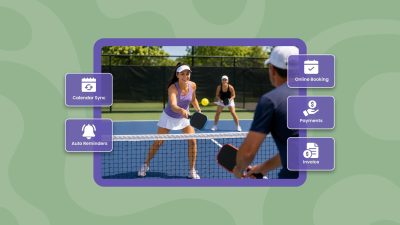
Growing clubs need a simpler way to manage day-to-day operations, not just a different tool. Picktime is a booking and scheduling management platform that brings appointments, coach schedules, customer records, payments, invoices, two-way calendar sync, reporting, and communication into one connected system. Rather than switching between multiple spreadsheets and calendars, club managers can keep track of daily operations from a single platform. Members can reserve courts online, keep recurring coaching sessions organized, and use waitlists to fill cancelled slots.
Picktime’s pickleball club software helps managers implement booking approvals to reduce scheduling conflicts, create class packages for regular coaching programs, and use automated notifications to keep everyone informed without additional manual effort. Whether managing deposits, partial payments, customized booking pages, CRM records, or mobile scheduling, Picktime helps clubs spend less time on administration and more time creating a better experience for every player.
Conclusion: What Works Well as Your Pickleball Club Gets Busier?
While some club members find spreadsheets easy to use and affordable, others have switched to pickleball scheduling software. Spreadsheets can help you manage your schedules when you have fewer participants. But when your club starts getting more reservations and training programs, manually handling operations may become stressful and time-consuming.
Picktime’s pickleball club software is a practical investment to ease your daily admin tasks. It helps you manage appointments, court bookings, payments, and club members’ information from one dashboard. It helps reduce repetitive admin work, missed bookings, and scheduling confusion with online bookings, reminders, and organized calendars. The more you focus on serving your customers, the easier it will be to grow memberships. Thus, it increases your club’s productivity and saves your time.
If your team is still managing your daily club activities with spreadsheets, it may be the right time to try Picktime. It can simplify your appointments, payments, reminders, club members’ details, and staff schedules from a single place, while saving your time.
FAQ’s
1. Why should a pickleball club use software instead of spreadsheets?
Spreadsheets work for small clubs, but as bookings, members, and schedules grow, they become difficult to manage. Pickleball club software like Picktime helps automate bookings, payments, and scheduling in one system, reducing manual work and errors.
2. Which is better for managing pickleball club bookings: spreadsheets or Picktime?
Spreadsheets can work for basic scheduling, but they often lead to double bookings and confusion. Picktime provides real-time court availability and online booking management, making it more efficient for growing clubs.
3. Is pickleball club booking software more suitable for large pickleball clubs than spreadsheets?
Yes. As clubs grow, managing multiple courts, coaches, and members becomes complex in spreadsheets. Picktime’s pickleball club software centralizes all operations, making it better suited for scaling clubs.
4. Can Picktime help manage coaches and training sessions?
Yes. Picktime lets clubs organize coach availability, assign sessions, and avoid scheduling conflicts, making training management much easier.