
Key Takeaways
- Managing room bookings, staff schedules, and shared resources manually increases the risk of missed reservations, scheduling conflicts, and extra administrative work.
- The right library management software keeps reservations, staff availability, visitor records, and shared resources organized in one place, making daily operations easier to manage.
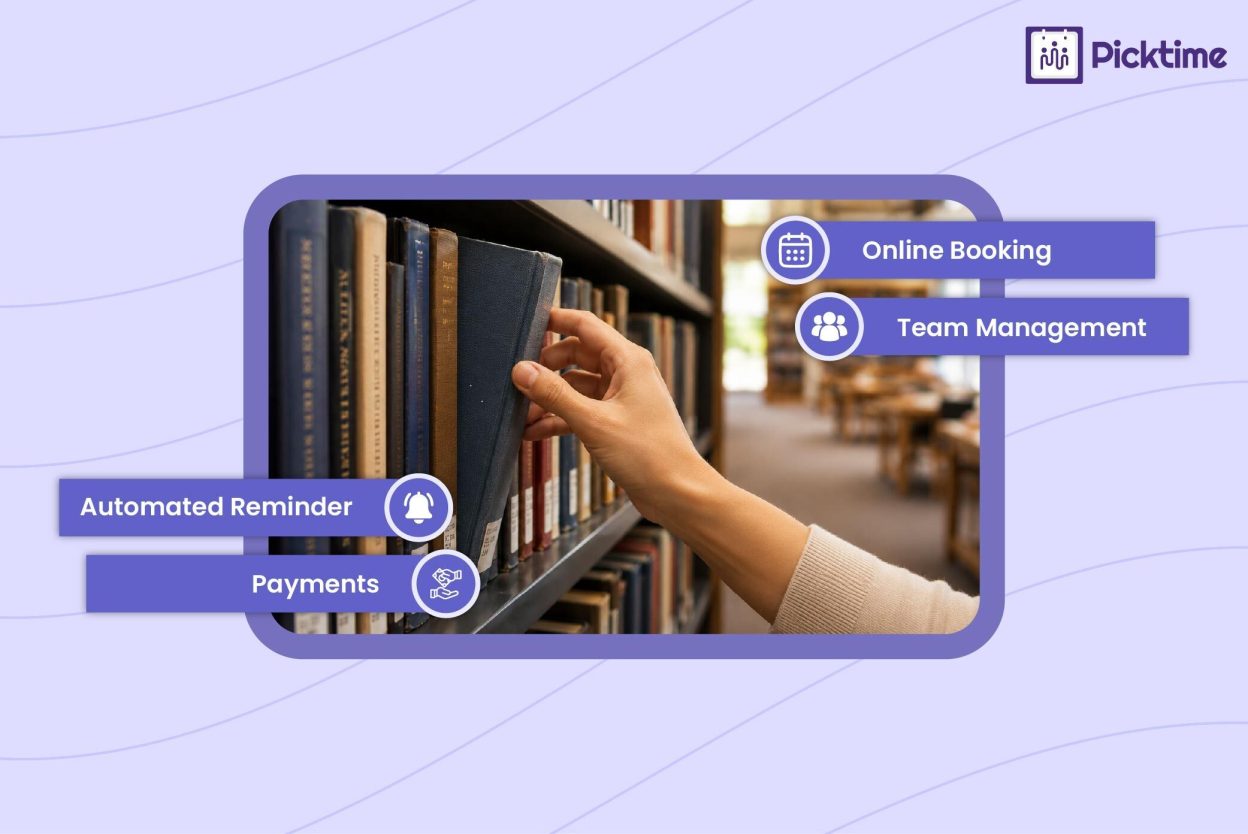
- Features like online booking, resource scheduling, automated reminders, payments, reporting, and mobile access help libraries deliver faster and more reliable patron services.
- Picktime combines room reservations, staff scheduling, resource management, payments, and automated communication in one platform, helping libraries spend less time managing operations and more time supporting their communities.
A library has more work to do than just lending books. Modern libraries need to handle daily reading room bookings, manage workshops, and track archives, payments, and patron records. The work doesn’t stop here; they have even more to deal with. Behind every library service, librarians need to coordinate room availability, visitor records, resources, and daily schedules to keep everything running smoothly.
As the library grows, managing these tasks single-handedly may create daily operational issues. That’s why many libraries now switch to library management software. Rather than spending time updating daily calendars or spreadsheets or using random tools. A management library system will help them to stay informed, respond faster to every request, and deliver a better experience to their patrons. In this blog, we are going to explore the library management program with its eight best features that every library must have to improve patron services and simplify daily library tasks.
Table of Contents
Why Modern Libraries Need More Than Basic Library Management
Libraries have become active learning and community spaces where visitors expect quick and convenient access to services. Along with borrowing books, library visitors reserve reading rooms, attend workshops, book research support, use shared computers, and participate in educational programs. As these services grow, librarians also need to manage room reservations, visitor records, staff schedules, resources, and event registrations at the same time.
Managing all of these responsibilities through separate spreadsheets, paper logs, or different software often creates unnecessary work. Reservation requests can be missed, room availability becomes difficult to track, and staff spend more time updating records than assisting library users. Modern library scheduling brings these daily tasks together, making it easier to organize services while giving patrons a smoother experience. Now we will go through some of the following features that play an important role in achieving that.
8 Library Management Software Features That Help Libraries Serve Patrons Better
1. Online Room and Service Booking
Many library users prefer booking services in advance. Whether they need a study room, a reading space, or a research consultation, they expect to check availability online and reserve a convenient time without making several phone calls or waiting for email replies. Manual booking methods often slow down this process and create extra work for librarians. This is where Picktime fits naturally into daily library operations. Picktime is an AI-powered library scheduling software that allows libraries to offer online reservations through a personalized booking page. Your library visitors can view available services, choose a suitable time, and book a service in just a few steps. Booking forms collect the required information, while booking approvals give librarians control over confirming requests before they appear on the schedule. This creates a faster and more convenient booking experience for both patrons and library staff.
2. Staff Scheduling and Calendar Management
Well-organized library services depend on both available spaces and the right people. Every workshop, research consultation, training session, or reference desk appointment also requires the right librarian to be available at the right time. When staff schedules are managed separately from reservations, even a small schedule change can create confusion.
Picktime’s library management system keeps librarian schedules connected with daily bookings through shared calendar management. With two-way calendar sync, schedule updates automatically stay in sync with Google Calendar and Outlook Calendar, so everyone works with the latest availability. Library managers can organize staff schedules, assign services, and avoid scheduling conflicts without updating multiple calendars manually. Automatic notifications also inform librarians about new bookings or schedule changes without requiring them to check multiple calendars throughout the day. As a result, libraries spend less time coordinating schedules and more time supporting patrons with the services they need.
3. Manage Shared Library Spaces with Resource Scheduling
Library resources are shared throughout the day, so they need to be organized just as carefully as staff schedules. Besides study rooms, many libraries manage computer labs, reading rooms, makerspaces, multimedia equipment, and training spaces. When reservations are tracked in different spreadsheets or notebooks, it becomes difficult to know what is available and when it will be free. A centralized library resource management system makes this process much easier. With Picktime, libraries can schedule rooms, equipment, and other shared resources from one dashboard. As soon as a reservation is approved, availability updates automatically, reducing the risk of double bookings.
4. Patron Records in One Place
Every interaction with a library user creates useful information that needs to be stored. Reservation history, workshop registrations, research consultations, and membership details help librarians provide better support during future visits. When these records are scattered across emails or paper files, finding the right information often takes longer than it should. Picktime’s library management system keeps library member records connected to every booking. Thus, librarians can quickly view previous reservations, upcoming appointments, and visitor information without searching through multiple systems. With all records in one place, librarians can find information faster and avoid entering the same details more than once. Rather than asking visitors for the same details each time, library teams can focus on helping them access the services they need.
5. Automated Reminders and Notifications
A confirmed booking is only the beginning of the service. Libraries also need to inform visitors about appointment changes, remind them about upcoming bookings, and notify them if a workshop or reservation has been rescheduled. It becomes difficult to manage every new confirmation when the visitor volume increases. Picktime’s integrated library automation system automates these routine tasks through booking confirmations, email reminders, SMS notifications, and schedule updates. Patrons receive timely information before their visit, which will help to reduce the chance of missed appointments and last-minute confusion. Librarians also spend less time answering routine booking questions because visitors already have the latest booking details. Clear communication helps libraries stay organized and gives visitors a better experience.
6. Payments and Invoicing for Library Services
While many library services are free, some libraries charge for workshops, training programs, room rentals, printing services, or membership plans. When payments are managed manually, receipts and reservations are often tracked separately. This makes it harder to monitor transactions and prepare invoices. Picktime brings bookings and payments into the system, which enables you to track booking-related information. Libraries can accept online payments for paid services, collect deposits when required, and generate customized invoices automatically after a reservation is confirmed. Payment records remain linked to each booking, making it easier for library managers to track transactions, process refunds when necessary, and reduce administrative work without switching between different systems.
7. Manage Library Operations from Anywhere
Library managers need to stay connected even when they’re away from their computers. They may need to check reservations, update staff availability, or respond to schedule changes while moving around the library or visiting another branch. With Picktime’s library management software, staff can access the mobile app. It can be helpful for both Android and iOS users. Librarians can access bookings, staff schedules, and daily appointments from anywhere. This makes it easier to respond quickly to changes and keep library services running smoothly, even when away from a computer.
8. Multi-Branch Management from One Platform
Managing multiple library branches is much more challenging than managing a single location. Each location may have different operating hours, librarians, study spaces, and community programs. Without a centralized system, keeping schedules and visitor information consistent across branches becomes difficult. Picktime’s management library system helps libraries manage multiple locations from one platform. Library managers can manage reservations, staff availability, resources, and services across every branch while allowing each location to maintain its own schedule. This creates a consistent booking experience for library users, whether they reserve a study room at the main library or book a workshop at another branch.
Conclusion: Improve Patron Services with the Right Library Management Software
Libraries offer more services if their visitors increase, and they need more services. Thus, library staff need to handle more resources, spaces, and daily activities. Staff need to manage daily schedules, room availability, payments, and special collections. For running a library smoothly, it is important to keep these activities organized. Managing it manually may be difficult and create unnecessary scheduling conflicts and errors.
Picktime’s library management software helps libraries keep these daily library tasks connected in a centralized place. Every feature of the management library system, starting from bookings, payments, staff schedules, visitor records, and automated reminders, helps the library to grow. It also contributes to a better experience for both patrons and librarians. Picktime allows the library staff to spend less time managing routine tasks and more time serving their library communities.
Want to simplify your daily library operations? Sign up with Picktime and see how it helps libraries handle room reservations, staff availability, payments, and resources through one easy-to-use library scheduling system.
FAQ’s
1. What features should every modern library have to improve patron services?
Modern libraries should offer online room reservations, staff scheduling, resource management, automated reminders, visitor records, reporting, and payment management where needed. A library management software like Picktime brings these features together in one platform, making it easier to deliver reliable services while reducing administrative work
2. How can libraries reduce scheduling conflicts?
Using separate spreadsheets, paper records, and calendars often leads to missed reservations and double bookings. A centralized scheduling system helps staff manage room availability, shared resources, and appointments from one place. Picktime keeps schedules updated in real time, helping libraries avoid conflicts and manage reservations more efficiently.
3. Can library management software manage multiple library branches?
Yes. Many modern libraries operate across multiple branches and need a centralized system to coordinate reservations, staff schedules, and shared resources. Picktime allows library managers to manage multiple locations from one platform while keeping bookings, calendars, and resources organized for each branch.
4. How can libraries make room reservations easier for visitors?
Offering online reservations allows visitors to check availability and request bookings without calling or visiting the library first. Picktime provides an online booking page, automated confirmations, reminders, and booking approvals, creating a faster and more convenient reservation experience for both visitors and library staff.