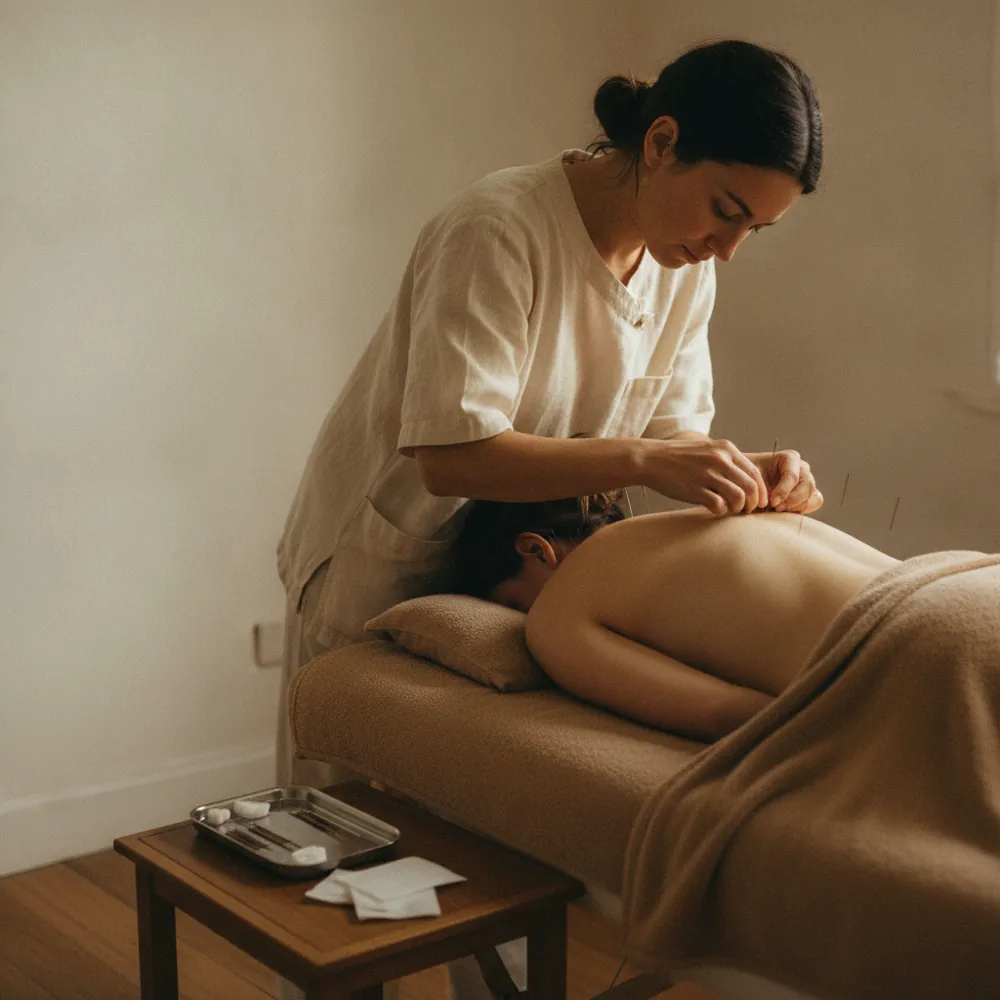
The treatment room is booked as its own resource
Add each room and it is held alongside the practitioner, so the page can offer a slot in room two while room one is resting, and can never offer the same room twice.
Needles take ten minutes to place and twenty-five to work, which is why an acupuncture clinic is really a question about rooms rather than about hours. Picktime books the treatment room as its own thing alongside the practitioner, so a clinic with two rooms can be booked as a clinic with two rooms rather than as one person’s diary with gaps in it.

Blu PointBook online
First treatment1h 15m · Room 1$90.00
Follow-up45m · Room 2$65.00
Cupping30mBook
Next free10:30 AM1:45 PM3:20 PM
Treatment room
Room 2
Booked as its own resource
Deposit
$22.50
Set per treatment type
Booked online
11:04 PM
While the clinic was closed
Four things that a diary of one person cannot represent and that decide how many treatments a day can hold.
Add each room and it is held alongside the practitioner, so the page can offer a slot in room two while room one is resting, and can never offer the same room twice.
The first one carries the consultation and takes as long as it takes; the ones after it are shorter and priced differently. Each type is set once with its own length.
Medical history, medication, what has been tried, what they have come about. On the paid plans your booking form asks it and the answers travel with the appointment, so the first treatment is a treatment.
Acupuncture works over a course rather than a session, and a course only happens if the dates exist. On the paid plans, set it to repeat and every one is generated forward with its own reminder.
Most of the money in an acupuncture clinic is agreed at the end of the first treatment, which is the worst moment to be finding a card reader.
Connect a payment provider and charge the full fee, a percentage or a fixed deposit, set differently per treatment type: nothing on a short consultation, the whole fee on a first treatment if that is your practice.
Where somebody is paying for a course rather than a session, an invoice can be raised off the booking itself, sent as a PDF and marked paid, so the paperwork exists without a separate spreadsheet.
Clinics grow by adding a practitioner before they grow by adding a room, and that is exactly when a shared paper diary stops working: two people, three rooms, and a Tuesday evening everybody wants. Each practitioner sets their own hours and their own list of treatments, the rooms are held with whoever is using them, and the page can only offer combinations that genuinely exist. A patient who always sees the same practitioner books that person; anybody who does not mind takes the first free room with somebody who does that treatment.
Twenty to six on a Tuesday. You have been in and out of room one all afternoon while somebody rested, and room two has not had anybody in it since four because the online diary treats your afternoon as one line rather than two.
Nothing about that afternoon looks like a lost booking. Every slot in the diary was taken; the diary simply could not describe a clinic with two rooms in it. Picktime books the room alongside the practitioner, so the hour a patient was resting in room one was an hour room two could be sold.
1h 40mRoom two empty, from four until twenty to six
0Free slots the diary showed all afternoon
Each treatment room goes in as its own resource, so it can be held alongside the practitioner. That single step is what lets a page offer a slot while somebody is resting in the room next door.
A first treatment with its consultation and its length, follow-ups with theirs, and, on the paid plans, your intake questions on the booking so the medical history is there before the patient is on the couch.
Behind a Book Now button on your site, in your Google Business profile and on the social profile most enquiries come from. Patients book, move and cancel from it themselves.
A clinic where the practitioner is also the receptionist misses calls all afternoon by definition, and the ones it misses are people ringing about a first treatment. Picktime’s AI receptionist answers instead.
Nothing on the free plan has an end date and there is no card behind it. What you pay follows how many practitioners and how many clinics there are, and never how busy a week turned out to be.
Bookings land in the Google or Outlook calendar you already keep, and the paid plans sync them both ways, so there is no second diary to reconcile in the evening. Payments and deposits run through PayPal, with Stripe and Square on the paid ones, and the booking page goes on the profiles patients actually search.
Picktime runs in a browser on a phone as well as a laptop, and there are iOS and Android apps, so the minutes between placing needles in one room and checking the other are enough to take a booking or send an invoice.
Acupuncture is a widely recognised practice with real benefits, and scheduling appointments by hand takes up a significant part of a working week that should be going into treatment plans rather than into a diary.
Picktime lets you set your availability and take appointments around the clock instead of going back and forth by email, and it works on the web and on a phone so patients can use it whenever they think of it.
Whether you are a solo acupuncturist or running clinics in more than one place, Picktime covers the operations of the clinic: an online booking page, services and resources such as treatment rooms managed together, oversight of your team members’ schedules, more than one location under one account, and an announcement bar for service updates.
On the paid plans it adds a customisable booking form so you can collect the medical history, previous medication or ongoing symptoms you need before a treatment plan is written, automatic appointment reminders, discounts and coupons where you run them, and Stripe and Square alongside PayPal.
Beyond scheduling it handles the money too: each time an appointment is scheduled you can reach the invoice inside your Picktime account, and PayPal means patients pay from the moment they book.
Picktime’s free plan covers a solo acupuncturist: your own booking page on your real clinic hours, treatments booked alongside the room they need, and a record per patient. No card and no end date, and the paid plans are about how many practitioners and clinics you have rather than how many treatments you give.
Practices that need clinical charting, herbal prescribing and insurance claims in one place buy an acupuncture practice-management system. Practices that want the booking to work (rooms, a page patients book and move themselves, a record per patient) and want to start without paying, are looking at something like Picktime, which many clinics run alongside their notes. Intake questions of your own, courses that repeat and reminders before a treatment are on the paid plans.
Yes, and it is the reason to set the clinic up this way. Each room is added as its own resource and held alongside the practitioner, so a slot in room two can be offered while somebody is resting in room one, and no room is ever booked twice.
Yes, on the paid plans. Add the questions you need answered before a first treatment (history, current medication, ongoing symptoms), and the answers arrive with the appointment and sit on that patient’s record, so the first treatment is not spent taking the intake.
Yes, on the paid plans. Set the treatment to repeat weekly for as long as the course runs and every date is generated forward with its own reminder. If one week has to move, only that week moves and the rest of the course keeps its spacing.
Yes. Connect PayPal on the free plan, or Stripe or Square on a paid one, and charge the full fee, a percentage or a fixed deposit, set differently for each treatment type. Where somebody is paying for a course, an invoice can be raised off the booking, sent as a PDF and marked paid.
Onto their record in your account, used to run the appointment, and on the paid plans you choose what the form asks so nothing is collected that you do not need. Requirements such as HIPAA depend on what is held, where it is held and what agreement covers it rather than on any one feature. If they apply to your clinic, ask us what we hold before you set it up rather than assuming either way. Security and trust sets out how data is kept.
Rooms and therapists A room held with the therapist, and regulars who come back to the same one.
See massage therapy scheduling
Rooms and classes Several practitioners sharing rooms, with classes on the same timetable.
See wellness centre scheduling
Long first visit A long first consultation followed by short reviews on a fixed cycle.
See nutritionist schedulingFree forever for a solo acupuncturist. No card, no trial clock, and a clinic that can be booked by the room from this afternoon.